The Most Secret Memory of Men.

In 1968, a Malian novelist named Yambo Ouologuem saw his first novel, Le devoir de violence, published to great acclaim, including winning the Prix Renaudot, before accusations that he’d plagiarized text from two other novels stained Ouologuem’s reputation and led to his withdrawal from public life. He eventually returned to Mali, publishing two books under a pseudonym and some poetry, before leaving writing entirely, dying in 2017 with his book still out of print in France. (A new edition appeared in 2018, and a new English translation came out in 2023.)

Senegalese writer Mohamed Mbougar Sarr took Ouologuem’s story and spun it into a novel of his own, The Most Secret Memory of Men, in which Diégane, a young Senegalese writer in Paris, learns of an obscure 1938 novel by T.C. Elimane, nicknamed “The Black Rimbaud” before he, too, was mired in a scandal of plagiarism accusations. He refused to address the claims and disappeared from public life entirely, while the novel, scarcely seen for decades, created a cult-like following in all who read it, with some readers trying to locate Elimane as he slides silently across the globe in his seclusion. Much as the Entertainment film in Infinite Jest drives everyone who sees it to madness, Elimane’s book, The Labyrinth of Inhumanity, possesses all who read it, driving Diégane to learn more about the author, the book’s publication, and the controversy that brought it and its author down.

Ouologuem became the first African author to win the Prix Renaudot, and his defenders have argued that the attacks on his authorship were motivated in large part by racism and nationalism. (In a lovely twist, Sarr won the Prix Goncourt for this book, making him the first African author to win the prize.) Sarr clouds the issue around Elimane’s case; the fictional author’s book did not borrow as much from any single source as Ouologuem appears to have done, but instead patched together lines and phrases from many books, maybe dozens, to create an entirely new work of art, like an album made entirely of samples that ends up sounding nothing like any of the original material. Elimane is, according to his acolytes, using colonialist literature as the building blocks for a post-colonialist novel that might have shaken the world had its white critics not had their way.

Sarr’s novel is itself a giant experiment, as he plays with genres as diverse as noir and the epistolary novel, and the result is a book that feels more out of breath than simply breathless. There is tremendous narrative greed as Diégane searches for Elimane, or anyone who knew him, or anyone else who has read the book. There are also some long monologues, particularly by one of the women who knew Elimane and tells her story in winding paragraphs that may not be reliably narrated. Sarr also includes a tangential subplot that nods to the Arab Spring, where a Senegalese activist lights herself on fire to protest the autocratic regime that rules their country, although its connection to our main story is tenuous. (Senegal did have an election in 2024, with some controversy, but the current leader has still clamped down on civil rights.)

The Most Secret Memory of Men’s greatest strength its anger: Elimane dared to win a prize previously reserved for white French authors, so they tore his novel and ultimately him to pieces. That may explain what happened to Ouologuem; it is also a powerful metaphor for post-colonial Europe, where countries that exploited the people and land of Africa, South America, and much of Asia have paid lip service to their ‘special’ relationships but still engage in racist and nationalist practices most obvious in the so-called migrant crisis. France wasn’t ready for an African writer to put them in their place in 1968; maybe they’re more ready to hear it now.

Next up: I just finished Rivers Solomon’s Sorrowland and started Jo Walton’s Tooth and Claw.

Arkansas eats, 2026 edition.

I did not expect to find stellar sushi and well above-average pizza in northwest Arkansas, but that region contains multitudes. It was my second trip to the reason and I have to say it’s one of my favorite places in the U.S. to visit.

Pizzeria Ruby is an artisan pizza shop with a sign from Fenway Park hanging up over the bar, for some reason. (My server didn’t know why. He also thought it was from New York.) Their pizza style is somewhere between Neapolitan and coal-fired Brooklyn or New Haven styles, crispier than Neapolitan on the outside and the undercarriage, and they use Bianco tomatoes for their red pizzas. I got their version of a margherita, which has more sauce and a few other Italian cheeses in addition to the fresh mozzarella, and would land in my top 30 for sure. I didn’t actually love the sauce, which I think might have been a little too salty, or maybe there was just too much of it relative to the cheese. Their pizzas are huge, 18”, so go with a friend. I also loved their anti-ICE and pro-people signage.

Junto is a sushi restaurant inside the Motto hotel, a boutique hotel in the Hilton chain that seems like an extremely cool place to stay. I know you can get high-quality fish shipped anywhere at this point, but I was still floored to get fish this good in the middle of the country, nowhere near a major airport. The salmon usuzukuri was as tender as I’ve ever had it, and the ponzu sauce paired well with its inherent fatty texture. The miso soup, despite being just miso soup, was also a big hit, mostly because of the dashi – someone’s making that from scratch. The pressed rainbow roll was my server’s suggestion, and it was good for what it was – again, really fresh fish – but probably not ideal for me because those rolls blur all of the different flavors.

Songbird Sandwiches is a food truck located by the 8th Street Market, serving 5-6 gourmet sandwich options along with fancy sodas and kombuchas, because this is actually California, not northwest Arkansas. I got the turkey sandwich which, to their credit, had so much slaw and lettuce and turkey that it probably could have fed me and my wife (had she been there) comfortably. I love their focaccia as well, although focaccia does struggle to hold the fillings when you use it for sandwiches. I’m not complaining one bit about the cost, but I was surprised that it was just over $25 for a sandwich, soda, and 20% tip. Thanks, Donnie!

Hail Fellow Well Met is a restaurant from the owner of Onyx Coffee, which is my favorite coffee roaster in the country and has been for a few years now. HFWM is located next door to Pizzeria Ruby and has a gorgeous space with a ton of natural light and multiple distinct seating areas. It’s counter-service, with a full coffee bar including a pour-over option from Onyx, and I went for brunch on the recommendation of the same person who suggested Junto. I thought I was being boring by getting the “HFWM Simple,” which is just eggs, bacon, potatoes, avocado, and one piece of toast. It is neither boring nor simple: The potatoes are in a rosti/knish sort of combination patty, the eggs are softly scrambled (and served in a cute clay cup), the bacon is thick rashers of pork belly, there’s also a dressed herb salad, the avocado has seeds and spices on it, and also there’s a piece of toast. The only hiccup, if that, was when I asked for hot black tea. You would think I ordered the world’s most obscure cocktail or something, but they did eventually figure it out. I was going to eat there and then go to an Onyx shop to work until my flight, but loved the space so much that I got the same coffee I would have gotten at the café and stayed there the whole morning.

Wright’s BBQ is an Arkansas chain doing Texas-style BBQ, which does mean their signature item is something I don’t eat – brisket. (I gave up eating cow about 7-8 years ago for medical reasons.) Instead I went with a quarter rack of ribs and the smoked chicken, with collards and cole slaw as my sides. The ribs were solid-average, maybe a touch better than that, good flavor, meat that was almost too tender inside, a little toughness around the edges. Probably just average. The chicken was a waste of time – I don’t understand why anyone smokes white meat. It just dries out – dark meat loves slow cooking, white meat needs something fast because it has so little fat. The cole slaw was really vinegary, just right to cut into the sweetness of the rub on the rubs, and clearly fresh because it was so crunchy. The collards were also pretty good, and I appreciate that the pork they used in them was still in large chunks so I could avoid them (just for health, I don’t need to eat what is essentially just more bacon) while still claiming I ate a lot of vegetables.

I stopped by Ozark Mountain Bagel Co. for a quick breakfast one morning, and, well, I got about what I expected. It’s just round bread, and the egg on the egg sandwich was one of those pre-cooked discs.

Finally, Onyx. I’m obsessed, especially with their space in downtown Bentonville, where the line wraps around the bar and out the door for hours on weekend mornings. Their coffee is superb – I’ve probably tried five or six single origins from them and at least two different blends, and I’ve loved all of them. They hit the right roasting level for me, at least, so the tasting notes come through, and with enough coffee to get some good body in the cup. (I’ve been to a few places recently where the flavor was good but the coffee itself felt thin.) Their pour-over menu this weekend included a Rwandan bean that was good enough for me to grab a bag on the way out, after which I walked around the Saturday morning farmer’s market for a while just to take in the atmosphere. If the rest of the state wasn’t somewhere to the right of Gilead, I could easily live there. As for Onyx … it’s still undisputed.

It Was Just An Accident.

Part psychological thriller, part political satire, but entirely human at its core, It Was Just An Accident is the latest film from acclaimed director Jafar Panahi, who has continued to make movies despite decades of conflict with the Iranian dictatorship, which extended to a conviction and prison sentence in absentia just last December. The movie won this year’s Palme d’Or and landed nominations for Best Non-English Language/International Film at the Golden Globes and the Oscars, and, like several of his prior films, was made without the permission of the theocrats in Tehran. (You can rent it on iTunes, Amazon, etc.)

It Was Just An Accident begins with a coincidence: a man is driving home at night on an unlit road with his wife and daughter in the car when he hits an animal, probably a dog, and damages the car. He pulls into the first garage he finds, where a mechanic, Vahid, recognizes the man as his torturer from an Iranian prison. He never saw the man’s face, but knows the squeaking sound of the man’s prosthetic leg. He follows them home, returns the next day, knocks the man out, and kidnaps him, nearly killing him before the man pleads that Vahid is mistaken. Vahid then contacts other former prisoners to see if they can confirm that the man is indeed their captor, Eqbal, also known as Peg Leg, leading to a very darkly comic sequence of events that has six people traveling around in a van, arguing about what to do with the guy who might have destroyed all of their lives.

The plot is secondary to the dialogue and the gamut of emotions it reveals; each of the four former prisoners has a different perspective on how to handle maybe-Eqbal, from the volatile Hamid, who just wants to kill the guy, to the more measured Shiva, who is just as angry as the rest of them but seems to understand that his death won’t solve anything. Instead, the story is the canvas on which Panahi can paint his characters, with enough narrative greed to keep up the pace during the stretches where the characters are just driving around and talking.

For most of its running time, It Was Just An Accident is close to perfect, maintaining an ideal level of tension, including the core mystery of whether the guy is actually Peg Leg, while allowing each of the characters to expostulate with the others enough to give the audience a sense of how the government’s persecution of its enemies has infected all of Iranian society. These four survivors are not visibly wounded; the irony is that the only injured person in the van is the suspected torturer, not his victims. Yet they are all scarred from their experiences in prison, where they were thrown after protesting against economic hardships – another coincidence, as the country is currently engulfed in similar protests, with prices rising and the Iranian rial crashing to record lows. How can they simply go about their lives after the trauma they endured, and now with the added knowledge that the man who tortured them, threatened to kill them, may have even raped one of them, is walking around scot-free?

The movie doesn’t quite stick its landing, unfortunately, as another coincidence of sorts, or at least an unrelated event, crops up that forces the motley crew to make some sort of decision, although it does also allow Panahi to further demonstrate the deep humanity of these people and further contrast them to the regime that would imprison or kill them on the slightest pretense. Once that’s resolved, we get to the climax, with its Shakespearean tone and series of monologues, before a brief final scene that recalls the perfection of the earlier parts of the film.

I’ve only seen three of the Best Picture nominees so far, but I’d put this over Train Dreams and behind Sinners and One Battle After Another. It’s unlikely to win for Best International Feature, as two of its competitors, Sentimental Value and The Secret Agent, scored Best Picture nods, but I wonder if it has a slight chance in its other category, Best Original Screenplay, which seems to be a way to honor a film that’s not going to win anything else, at least about half the time in recent years.

Darwin’s Journey.

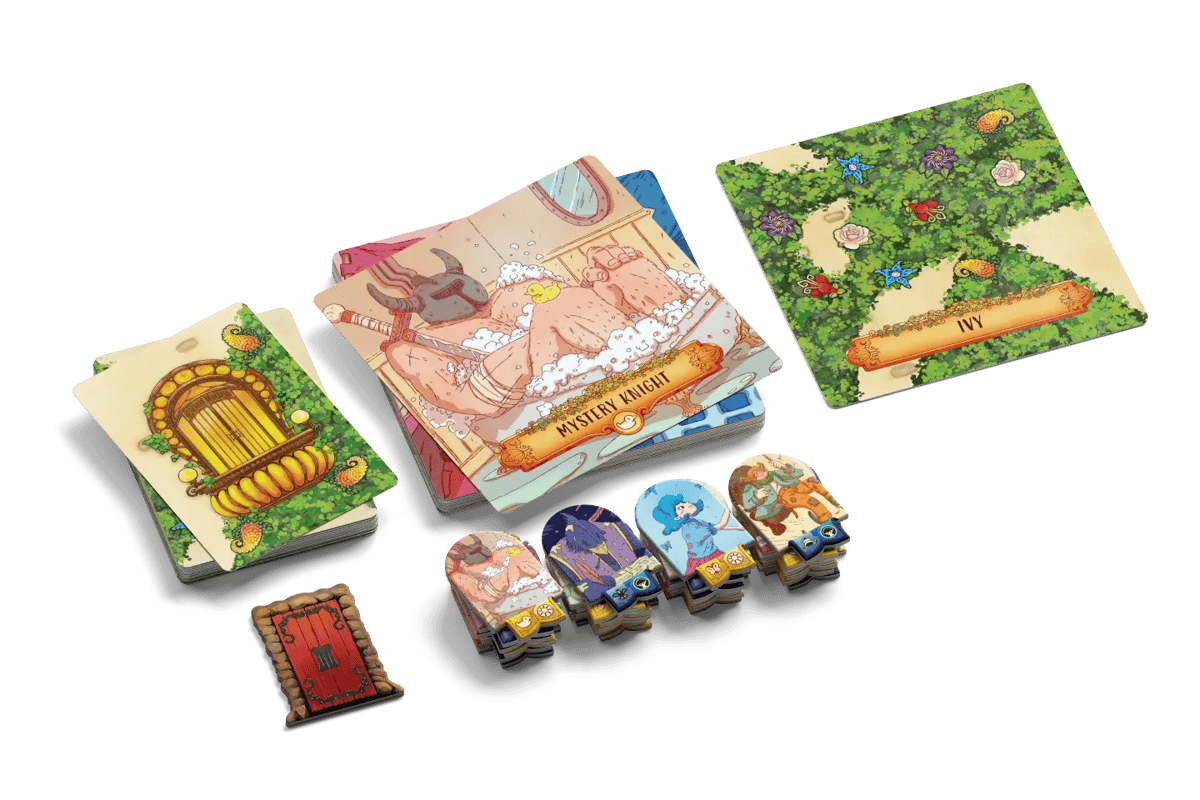
Darwin’s Journey is one of the greatest complex board games I’ve ever played – although I’d call it more medium-heavy than heavy – with its incredible balance of various mechanics, strategies, and even a little player interaction. It first came out in 2023 and has since soared into the top 100 overall on BoardGameGeek, a list that skews towards heavier games, while also jumping on to my own top 100 at #16 this November, the highest new entry of any game this time around. I’ve owned the game for probably two years, having picked it up on Prime Day in either 2023 or 2024 for half off, and also love the fact that the box is half the width of any other game of its playing weight I own. (It’s out of stock right now at Miniature Market, but Noble Knight has some used copies.)

Designed by Simone Luciani*, who has three games on my top 100 (Grand Austria Hotel is #17, Tzolk’in is #57), and Nestor Mangone (Masters of Renaissance, last year’s Stupor Mundi), Darwin’s Journey is a worker placement game at heart, asking players to place their four crew members on various action spaces to move their ship, place and move explorers on three mini-maps, gain ‘seals’ to give those crew members more abilities, place stamps for ongoing rewards at the end of each round, deliver specimens to the museum or research ones already there, and more. There are countless opportunities to chain your actions as the game progresses, and you can even add a fifth crew member if you complete a gold-level objective. There are also objectives for each round, plus end-game objectives, with two (one gold and one silver) given to each player at the start, then more available as the game goes along. You also have to make sure you have enough cash on hand, because taking actions nearly always costs at least one coin. There’s a lot going on here, to be sure, although I think the turns are so simple – and your options become more limited within each round as you have fewer workers left to place – that the game play isn’t that complicated.

The rounds are marked by the progress of the HMS Beagle, and that’s one of the few places in this game where the actual history of Darwin’s voyage intersects with the mechanics. (It’s still better at that than the acclaimed In the Footsteps of Darwin, a much inferior game to this one in every way.) You lose points if any round ends with your personal ship behind the Beagle’s position, after which it moves forward to the next marker on its path.

Within a round, each player will place one worker per turn, based in part on the seals (skills) that worker has. You start the game with four workers, one with a wild seal, and then three others with seals you’ll choose in a crew-card draft before the game. The seals represent ship movement (blue), explorer movement (green), stamps (yellow), and more seals (red). When the game begins, there’s one available space for each color of seal, and each of those spaces holds an unlimited number of workers. Once there’s one worker anywhere on the blue/green spaces or the red/yellow spaces, however, placing another one there will cost 2 coins (or 3 in a two-player game). Players can unlock further, more powerful action spaces under each of those four by paying the unlocking cost to place a ‘lens’ on those spaces, making them available to all players – although anyone else has to pay you a coin to use yours. There are six special action spaces that change each game, two of which are available at the start while four are locked. You can also go to the museum to submit or research specimens, go get another objective tile and gain some coins, or go move up in the turn order and gain some coins. If everything’s unlocked, which I don’t think is technically possible, there would be 24 possible action spaces by the end of the game; I think the maximum is actually 22, and I’ve never seen that many in an actual game.

Darwin’s Journey also offers players all sorts of … not quite mini-games, more like side quests that carry real bonuses. You start with 12 stamps in three sets; if you send out all four of a set, you get a bonus. Explorers can place tents on certain spaces on all three maps; you get five of them, and after the first one, each subsequent one you place gets you a bonus. Each crew card you drafted at the beginning has a specific set of five seals shown on it; if you get all five of those seals on one worker’s row, you can assign that card to that worker and get the bonus shown. Getting five seals on a worker also gets you three points at game-end; getting the sixth gets you seven points, and having at least four seals of a certain color gets you an additional benefit when you use that worker for that action. Still with me?

The game goes five rounds, after which you do the end scoring, adding to points you gained during the game from each round’s objective and from points you picked up with your explorers. You score all of your personal objectives. Then you score the research track: every time you submit a specimen, you gain some research points and/or coins, while you can also move up the research track via exploration and occasionally through a special action space. You count the completed rows of specimens in the 4×4 museum, add two, and multiply it by the highest number your marker has passed on the research track; it’s the weirdest part of the scoring by far, but the point gains here can be substantial, easily a quarter or more of your total. I’ve seen winning scores over 200 points, and I have won a game with only about 155 or so.

I’m worried I’m not selling this game enough: It’s fantastic, easily one of the best complex games I’ve ever played, behind only Great Western Trail on my top 100, one spot ahead of Grand Austria Hotel and four spots ahead of Agricola. GWT is a little more accessible, I think, but it has a small deckbuilding element, which is one of my least favorite mechanics. Darwin’s Journey is more forbidding, and getting all of the parts to work together in your head is a real challenge – and even after many plays, I’m still not great at it, because my preferred strategies may not work as well with the specific actions and maps and other facets specific to that game’s board. If you pulled both games out and asked me which one I’d want to play, I’d have a hard time choosing.

* I actually haven’t played Luciani’s highest-rated game, Barrage, which I’ve heard is amazing and quite brutal in its interactive elements. I hated Rats of Wistar – literally got up mid-game at a First Look demo at PAXU and left, although part of that was one of the other players was insufferable – and I would say I like but don’t love Lorenzo il Maginifico, preferring the card-game version. He also co-designed a new version of Railway Boom with Hisashi Hayashi, who won the Spiel des Jahres last year for Bomb Busters and designed the excellent Yokohama games. As always, forza azzurri!

The True True Story of Raja the Gullible (And His Mother).

Raja is a portly gay 63-year-old teacher in Beirut who lives with his overbearing, impossible mother. He calls himself gullible, although I think he’s being overly self-deprecating; he’s surrounded by lunatics, and lived through more history than most of us, from the Lebanese Civil War to the collapse of the country’s economy to the 2020 explosion at the city’s port. Rabih Alameddine’s The True True Story of Raja the Gullible (and His Mother), winner of the 2025 National Book Award, follows him in a sort of picaresque fashion through his memories of these and other major events in Lebanese history, as he ends up in one ridiculous situation after another, often with the city around him in ruins or chaos. It’s consistently funny, even in its sorrows, with an indelible main character (and his mother) as our tour guide through a sort of absurdist realism, where the improbable takes place right amidst the actual over the course of six decades.

The prompt that opens the novel is that Raja, a philosophy teacher who wrote one book that was reasonably successful, receives an invitation from a foundation in the United States to pay for him to come to their compound and give a lecture. This, he tells us, he accepted, because he is gullible, and it turned out to be a mistake, although we won’t find out what happened until the penultimate chapter of the book. On the way to that story, Raja walks us through multiple episodes in his life story, each tied to some major event in modern Lebanese history. He missed a huge chunk of the Civil War because he was kidnapped, but not by enemies: it was by a friend of sorts from school who hides Raja away after he witnesses a murder. He’s saving Raja’s life, but he also insists that Raja teach him to dance so he can sleep with some girl in their class – clearly assuming Raja can dance because he’s gay. That’s just the setup; the story goes off the rails from there, or perhaps the rails were blown up by the Israeli invaders. Who can say.

Raja is truly a delight as a narrator and a main character, and his relationship with his mother, who loves to respond to him in paradoxical fashion with “Fuck your mother,” is both an important throughline and a consistent source of laughs. The novel’s nested-stories structure allows Alameddine to jump around through time, while Raja and his mother are there in every one of those stories – true or not, as some of these tales are hard to believe, notably the one of the kidnapping, where Raja and his kidnapper become lovers in a sort of kicked-up gay Stockholm syndrome. Each of the stories, including the resolution of the speaking invitation, which itself is hard for Raja to believe because he’s not an author – he wrote one book, 25 years earlier, that wasn’t successful in the United States, so why on earth would someone there want him to come speak? The answer to that, as with so much else in the book, is hilarious on its surface, but comes with layers of meaning that point to Lebanon’s inability to reckon with or learn from its own history, which keeps looping back on itself, from crisis to crisis, with the Lebanese people always the ones to suffer – including Raja, who takes each setback in a fatalist’s stride.

There are probably further layers of the book that I missed because I’m not that familiar with Lebanon’s history; what I do know is largely through an American lens, such as the news coverage of the hostage crisis, which obviously didn’t paint Lebanon in a kind or accurate light. Alameddine depicts an entirely different Beirut, that of a worldly city with many modern aspects, beset by corruption and conflict, but one where a gay philosophy teacher and his overbearing mother can live their ridiculous life, with a too-large coffee table and a parade of terrible relatives, in something resembling happiness. It’s a richly textured work that takes great tragedies and packages them in wry humor, all delivered by one of the most delightful narrators I’ve encountered in ages.

Next up: I’m way behind on writing up books I’ve read, but right now I’m reading Andrei Bely’s Petersburg.

Cascadia: Alpine Lakes (Kickstarter preview).

Cascadia is one of my all-time favorite games, combining easy-to-learn rules with plenty of strategic depth and a high degree of replayability because the base game comes with so many different ways to score the game’s five animal types. Designer Randy Flynn and the folks at Flatout Games are back with a new game, on Kickstarter for a few more days this week, called Cascadia: Alpine Lakes, that adds a little bit of complexity for a very similar game that’s slightly more difficult than the original to play well, but just as easy to learn. (Flatout provided me with a pre-release copy, so the rules I describe below may not be the same as in the final version.)

In Cascadia: Alpine Lakes, players are once again building environments that comprise habitat tiles and animal tokens. The habitat tiles here comprise two hexagons rather than one, and there are just three habitat types: forests, meadows, and glaciers. On your turn, you select one of the four habitat-animal pairs available from the table and add it to your environment, placing the animal token on a matching space anywhere in your space (not limited on the tile you just took).

Some hexes don’t show animal figures, but show lakes, which are one of the two main new features in the game. Lakes score 1 point per level, because the other new feature here is that you can build upwards, stacking habitat tiles according to a couple of straightforward rules (the big one is you can’t create a two-level drop from one habitat tile to any adjacent one). You also double a lake’s value if you’ve surrounded it with other tiles, regardless of those tiles’ levels.

Unlike in Cascadia, the animal tokens don’t score by themselves in Alpine Lakes. You score each habitat type based on the scoring card chosen at the start of the game – there are six for each habitat right now – and you can also use three advanced scoring cards if you wish to add a little more variance. The one way in which animal tokens score by themselves is in awarding points to the player(s) who have the highest animal token of each type, meaning one placed on the highest tile level, so there’s a little competition here, especially in a two-player game, to try to deprive your opponent of getting that advantage.

Players get exactly 20 turns, as in the original, and if you’ve played Cascadia you’re familiar with the nature tokens that you can acquire (same method here) and use to break up tile-token pairs in the market or refresh the animal tokens. It’s fundamentally the same game as Cascadia, adding some complexity because you have more choices to make, such as when to build upwards versus expanding outwards, and the relative values of each will shift slightly depending on the scoring cards used in any particular game.

I was already primed to like Cascadia: Alpine Lakes because I love the original so much – I just recommended it to someone with 8-year-old twins, in fact, because it’s so easy to teach and still gives the adults plenty to chew on. Alpine Lakes is a standalone game, but it feels to like like an expanded version of Cascadia rather than an entirely new title – which I much prefer to the “let’s extend a brand with a totally unrelated game under the same title” trend. If you like Cascadia and want something more, especially something a little more challenging, then Alpine Lakes is for you.

We Do Not Part.

Han Kang won the 2024 Nobel Prize in Literature in part for her 2021 novel We Do Not Part, which appeared earlier this year in English translation for the first time. This exploration of one of the darkest moments in modern Korean – and American – history works through a struggling female protagonist, somewhat similar to the lead character of her novel The Vegetarian, who finds herself called to the hospital bedside of a friend with whom she was once collaborating on a project about the Cheju genocide. This call leads to a visit to the sick friend’s house, where the lines between reality and dream start to bend, and it’s unclear whose memories we’re reading or how legitimate they are.

Kyungha is a writer who is deeply isolated and almost certainly depressed, often forgetting to eat, sometimes lying for hours on her apartment floor to escape the oppressive heat of the city’s summers. When she sleeps, she’s plagued by nightmares related to the massacres at Cheju, which inspired a scene in her latest, unfinished novel. She gets a call from Inseon, with whom she’d worked on a documentary of sorts about the same killings; Inseon is injured and will be stuck in the hospital for weeks, so she asks Kyungha to go to her house to feed her bird Ama. Once there, however, Kyungha gets stuck in the house without power due to a blizzard, and she begins hallucinating, or perhaps she has died and is experiencing something paranormal, with the result that she ends up hearing the history of Inseon’s family during the massacres.

Cheju (or Jeju) Island is located south of the Korean peninsula and currently has over 600,000 people living there. The residents of the island had begun protesting the planned election in the southern half of Korea, controlled by the United States at the time, because they believed it would lead to a permanent partition. In 1948, the communist party on the island organized a general strike, which turned into an armed insurgency. The strongman Syngman Rhee, the first President of the Republic of Korea, responded with brutal force, with the full backing and consent of the United States, killing somewhere between 15,000 and 100,000 people on the island. The Korean army forces killed children and babies and gang-raped women and girls. Tens of thousands of others were imprisoned for their alleged roles in the insurgency. After the massacre, it was illegal to even mention the government’s actions on Cheju until 1990, and South Korea didn’t hold a truth & reconciliation commission until 2003, when the government finally admitted they had committed genocide against the people of Cheju. (For more on the history of the Cheju genocide, the Wikipedia article is superb, as is this 2000 story from Newsweek.)

We Do Not Part deals with such heavy material that it’s hard to call it a “light” read, but Kang is such a strong prose writer – and some of this may be a credit to the translators, e. yaewon and Paige Aniyah Morris – that it is an incredibly compelling, accessible read, even for someone (like me, before I read the book) with zero knowledge of the history involved. The first half of the book reads quite a bit like Kang’s novel The Vegetarian, with the protagonist’s alienation permeating all aspects of the narrative, while the second half veers almost into magical realism. As Inseon and her mother retell the histories of Inseon’s father and uncle from the time of the genocide, including witnessing massacres of civilians, Kang’s technique and prose give them a hazy quality to emphasize that these are ghosts or spirits or even Kyungha’s subconscious relating these stories.

I’ve been sitting on this post for four days now, and I think I’m just stuck on this one. I loved this book, but I also know this book has way more going on than I understood or appreciated. I’m not Korean and I didn’t know a single thing about the Jeju genocide until I read it and went to Wikipedia to figure out what I was missing. I’ll just stop here and say the book is fantastic, and I would recommend this even before The Vegetarian.

In 2021, LitHub published a list of the 50 best classic novels under 200 pages, which included several titles I’d already read and enjoyed, so I copied the list into a Google sheet and started reading my way through it – often just reading whatever I found in bookstores on my travels. I grabbed Clarice Lispector’s Near to the Wild Heart at Changing Hands last month, since it’s on the list and takes its title from the same James Joyce quote that Japandroids used for their best album. It got the better of me; I did finish it, but I struggled because nothing happens in the novel. It presents the inner monologue of Joana, flashing back to her childhood and her present marriage to her faithless husband Otávio, with the sort of disjointed sentence structure of Joyce or Alfred Döblin or Virginia Woolf, all of whom I have found difficult to read. This one just wasn’t for me.

Christopher Isherwood’s A Single Man also comes from the LitHub list; he’s better known now for his Berlin Stories, which inspired the musical Cabaret, but this is a more serious novel and seems like it was considered his best work during his lifetime. The title character is George Falconer, a gay man whose partner Jim has recently died. George is British and now lives in California, in the house he shared with Jim and some pets he seems to have gotten rid of after Jim’s death, teaching at a local university and trying to find new meaning in his relationships with other people. The story moves in fits and starts, but picks up towards the end with two much more meaningful conversations, before the slightly ambiguous ending (I think it’s real, but I see online some people believe it’s a what-if). Falconer is a flawed character, pretentious at times, mopey at others, probably just not a very nice guy, but still makes for an interesting study. I can’t find an answer to this, but I wonder if John Cheever was paying homage to A Single Man in his novel Falconer, another influential gay novel that came out about 16 years after this one. The dialogue here can get a little stilted, but it seems to be in service of making George’s awkwardness in social situations – but not in terms of his own sexuality – clearer on the page.

Next up: Susan Orlean’s The Library Book.

Two books about games.

In Playing with Reality: How Games Have Shaped Our World, neuroscientist Kelly Clancy examines how the frameworks of games have affected myriad aspects of human society, and how more recently game theory and related ideas have led to damaging and even ruinous policies that continue today with the mindless (pun intended) push to make everything AI.

Playing games leads our brains to produce dopamine, and games with uncertainty function as variable reward systems, increasing those dopamine surges and further encouraging us to keep playing. Thus we see evidence of games going back to ancient Babylon (the Royal Game of Ur), Egypt (Senet), and Africa (mancala), with games often used as tests of intelligence or readiness for a position as a leader or even as royalty. Such games often included substantial elements of chance, including the progenitors of dice, which led to early calculations of probabilities well before the Europeans started to figure this stuff out in the wake of the Renaissance. Games have evolved over time in complexity, and as they have developed, they have further permeated our non-playing world.

Clancy sets the stage by giving that history and an explanation of what happens in the brain when we play games, including games of chance and games of strategy, and then moves into the more sordid history of games affecting … well, history. She goes into the story of Kriegsspiel, an early wargame that was first developed by a Prussian nobleman two hundred years ago, and after several decades found its way into military leaders’ hands, where it became a tactical training tool for officers in the Prussian and later German armies. Clancy connects it to the Germans’ early successes in World War I and the use of the Blitzkrieg strategy in World War II, both as a way to explain how we can use games to learn and to think more flexibly, as well as how games can lead to unexpected and even tragic outcomes when used without guardrails.

Game theory ends up the main character of the second half of Playing with Reality, as Clancy points out that the way game theoreticians took over much of economic teaching, dovetailing as it did with the myth of the ‘rational’ man, led to decades of policy failures across the world that were based on a set of faulty assumptions about how people would act. (She did not, unfortunately, mention the “it’s time for some game theory” meme.) This idea of “economic man” or “rational man” had a stranglehold on economic instruction throughout the world for decades, well past the point where folks like Daniel Kahneman and Amos Tversky had published research showing that people are in fact not rational, and often fall prey to cognitive biases, leading to results you won’t predict if you’re stuck in the standard model.

Clancy saves some of her particular ire for the AI gold rush and the grifters pushing it, cautioning that these LLMs are not actually exhibiting ‘intelligence,’ and that there’s danger in treating “language like a game without meaning.” Much of what she says about these energy-devouring scams could have been written this week, even though the book itself was first published last year; she decries the lack of regulation or even common sense in many of the uses of so-called AI, and the history of the overapplication of games and game theory to real-life – often treating the world as a zero-sum game, when it is manifestly not – shows how easily we can destroy the world by thinking in those terms. (She cites a specific example from the Cold War, where one Soviet engineer decided to ignore an alarm that a U.S. ICBM was heading towards Russia; the alarm was false, of course, but that one person’s decision, against the ‘rules’ of the game, saved us from World War III.)

Clancy’s focus is on how games are intrinsic to humanity, how we’ve tried to model reality in our games and then taken the games and tried to apply them back to reality, with mixed results if we’re being kind. Mathematician Marcus du Sautoy takes a different approach in his book Around the World in 80 Games: A Mathematician Unlocks the Secrets of the Greatest Games, which may not actually get to eighty games (and certainly not the greatest ones) but does at least provide some interesting histories of games outside of the western canon, truly going around the world to explain the origins and uses of games in Africa, South America, and across Asia. The book offers some superficial looks at the math behind some of these games, but it’s scant, and it’s hard to get away from du Sautoy’s pie-eyed optimism around AI, which he seems to view as an unmitigated positive that will take drudgery from our lives and allow us to play more games.

Du Sautoy succeeds most when he gets a little deeper into the specifics of a game, such as the analysis of which properties are the best ones to buy in Monopoly (the orange ones above all), or the history of tarot cards (which had nothing to do with the woo for which various charlatans have adapted the game), or the stories of games from non-European cultures that were unfamiliar to me, like Sudan’s Dala – many of which have been ‘solved’ by mathematicians, for better or for worse. Du Sautoy writes very much like a mathematician, so when he’s in the weeds, he’s actually clearer and his passion is palpable, but when he starts veering off into philosophy or his almost religious belief that AI is going to save the world, not only is the prose harder to read, but he’s clearly out of his depth.

Both books quote many of the same sources on the philosophy of games, including Bernard Suits’s The Grasshopper and C. Nhi Nguyen’s Games: Agency as Art, which makes their tonal differences more stark. Clancy is the realist here, someone who certainly seems to like games but understands their limitations as models for society as a whole, while du Sautoy is the Panglossian dilettante whose life of relative privilege – his grandfather ran the publisher Faber & Faber and his godmother was T.S. Eliot’s wife Valerie – has perhaps blinded him to the realities of daily life for most people. Du Sautoy does cover more specific games, if that’s where your interest lies, while Clancy has much more to say about games as a whole.

Next up: Staying on a theme, I’m reading Philip K. Dick’s pulpy The Game-Players of Titan.

Glyph.

Glyph was Percival Everett’s tenth novel, published in 1999, at a point when Everett was earning critical acclaim but not much commercial attention. It’s a much more academic work than any of his later novels I’ve read, satirizing post-structuralism and some of its leading lights, but you can see more than a few glimpses of Everett’s humor, foreshadowing his more broadly successful later work.

Glyph is narrated by Ralph, a very precocious baby who is able to read and write at the level of a graduate student before he turns one, shocking his parents – whom he calls Inflato (father) and Mo (Mother) – and eventually leading to unfortunate interest from a series of would-be evildoers who plan to use him for their own nefarious purposes. Ralph communicates via written notes, which, of course, people don’t believe he wrote at first, but after his parents accept that Ralph is indeed a genius, they take him to a psychologist for evaluation, only for the psychologist to decide that Ralph is her ticket to research fame and to kidnap him – which works until the government shows up.

The plot itself takes up maybe half of the book, with the remainder split between Ralph’s musings and various interstitials, like imagined conversations between important personages from history, including literary theorist Roland Barthes, one of the major figures of structuralism and post-structuralism – and thus a prime target for Everett’s satire. Inflato is a failing professor of literary theory, and at one point he has Barthes over for dinner, only for the French philosopher to leer at Mo and eventually admit he’s never read Inflato’s work.

Other literary theorists and thinkers in related fields like semiotics and philosophy come in for further satire or just outright mockery, whether directly in the text or in any of the many asides, like constructed dialogues between two such figures from different times in history. Every chapter is divided further with subheadings that almost seem drawn from a hat filled with terms from lit-crit movements of the latter half of the 20th century, including structuralism and post-structuralism, deconstruction, and post-modernism. Everett wrote the book while he was a professor of creative writing at UC Riverside, but had moved on to become chair of the English department at USC by the time it was published, which at least makes me wonder if he was mocking some of his by then former colleagues at UCR for their adherence to these philosophies – not least because he has said many times since that Ralph is the closest of all of his protagonists to his own character.

Glyph also has plenty of lowbrow humor, including a slew of potty – well, first diaper, then potty – jokes, bad puns, and Airplane!-esque gags, which softens some of the more abstruse material here for readers who, like me, don’t care for these distinctly anti-literary schools of thought. Yes, academics can certainly spend their time on textual analysis or examining the relationship between a work and its broader context. I’d probably do just that if I were a professor of literature somewhere, or if my livelihood otherwise depended on it. I read for pleasure, however, and I can’t read books in that way at all. If a book doesn’t grab me with its plot, or its protagonist, or its prose, I’m not going to like it or appreciate it. Glyph skewers some of the same ideas I disdain for their desire to strip literature down to the studs and ignore the trappings of great fiction, but it also does so with a strong and funny central character, Everett’s acerbic wit, and a ridiculous plot that just barely holds together for the novel’s 200 pages.

Related: This 2024 profile of Everett in the New Yorker, written by Maya Binyam, is outstanding.

The Ministry of Time.

Kaliane Bradley entered the crowded field of time-travel fiction last year with her debut novel The Ministry of Time, earning a Hugo nomination for Best Novel and landing a coveted spot on Barack Obama’s best-of-2024 list. It’s a marvelous book that does this sort of fiction right: it’s very light on the time-travel parts, and spends extremely little time worrying about the mechanics or the paradoxes, instead jumping off time travel for a story that is by turns philosophical, psychological, and quite romantic.

The narrator of The Ministry of Time is a British-Cambodian woman, like Bradley, and has been working in various government agencies when she’s tabbed for a special project as a ‘bridge’ to one of six people that the British government has plucked from history and brought to the present. There is a single time-travel door, and while the government hasn’t mastered its use – far from it, as we learn – they went through history and found people who were otherwise about to die, usually in horrible ways, to ‘save’ them by way of making them guinea pigs in a massive experiment. The narrator’s charge is Commander Graham Gore, who was aboard the HMS Terror during the doomed Franklin Expedition in the Arctic waters north of and around what is now Nunavut, where the search for a Northwest Passage to Asia led to the death by exposure and starvation of over 100 men, along with no survivors. The Ministry extracted Gore, knowing he would die shortly anyway (so his removal would not affect the historical timeline), and put him in the narrator’s care, housing them together in a shared apartment once he’s released from several weeks of confinement and forced re-education so he and his fellow time travelers, some of whom came from the 1600s, would know what a car is or how money works.

There is a thriller here within The Ministry of Time – as you might imagine, the British Crown’s intentions here are hardly pure or altruistic – but the novel is a love story at its core, as the narrator and Graham develop feelings for each other from very early on, despite the gulf between them in times, cultures, and ethnic origins. (Race and racism are frequent fodder for dry humor in the book, especially as the various ‘expats’ from times past, all of whom are white, struggle to adjust to a multicultural society where a whole bunch of words are no longer suitable for common use.) The relationship comes across as natural, almost inevitable, including the required element where one gets furious at the other and appears to break things off, which here happens simultaneously with the big twist and leads to a slightly ambiguous but extremely satisfying conclusion.

Bradley also has a knack for creating supporting characters who manage to be three-dimensional and yet still useful in various ways, often for humor but occasionally for purposes of intrigue or suspense. The narrator’s own handler, Quentin, might be a conspiracy theorist, or he might know more than he lets on. Maggie, from the 1600s, turns out to be a saucy wench (channeling my inner Laurence Sterne here), and gets to explore her sexuality in a way that would never have been permitted in her time. Arthur was about to die during World War I, and has a harder time adjusting to the fact that he’s now in a time when his life and liberty won’t be at risk just because he’s gay. And Adela, the Ministry of Time’s Vice Secretary, starts out as a sort of comic relief taskmaster character, but plays an increasingly essential role in the plot as the story develops.

I said before reading The Ministry of Time that I thought it was going to win the Hugo, because it had so much hype and positive press behind it, and because the last ten nine authors to win the Hugo for Best Novel have all been women, with only one of the other six nominated works written by a woman author. Bradley’s work also includes significant explorations of race, sexual orientation, and culture, again all things the voters have tended to favor, over the sort of hard sci-fi that dominated the award’s first 40-odd years – with the winners then nearly always white men. (One exception is The Calculating Stars, the 2019 winner, one of the worst novels ever to take this award. The author was the President of the Science Fiction & Fantasy Writers Association at the time.) Now that I’ve read it, I also think it’s going to win because it deserves it* – it would be an upper-half novel among all the winners, probably the best novel to win since N.K. Jemisin’s three straight wins, just edging out T. Kingfisher’s Nettle & Bone. It’s sci-fi, but it’s literary sci-fi, one that uses a single speculative element to tell the sort of story an author couldn’t tell otherwise, and those are nearly always the best examples of the form.

*The other three nominees I’ve read, all of which were good: Service Model, A Sorceress Comes to Call, and The Tainted Cup.

Next up: Natalia Ginzburg’s Family Lexicon, a classic of 20th century Italian literature.