Cascadia: Alpine Lakes (Kickstarter preview).

Cascadia is one of my all-time favorite games, combining easy-to-learn rules with plenty of strategic depth and a high degree of replayability because the base game comes with so many different ways to score the game’s five animal types. Designer Randy Flynn and the folks at Flatout Games are back with a new game, on Kickstarter for a few more days this week, called Cascadia: Alpine Lakes, that adds a little bit of complexity for a very similar game that’s slightly more difficult than the original to play well, but just as easy to learn. (Flatout provided me with a pre-release copy, so the rules I describe below may not be the same as in the final version.)

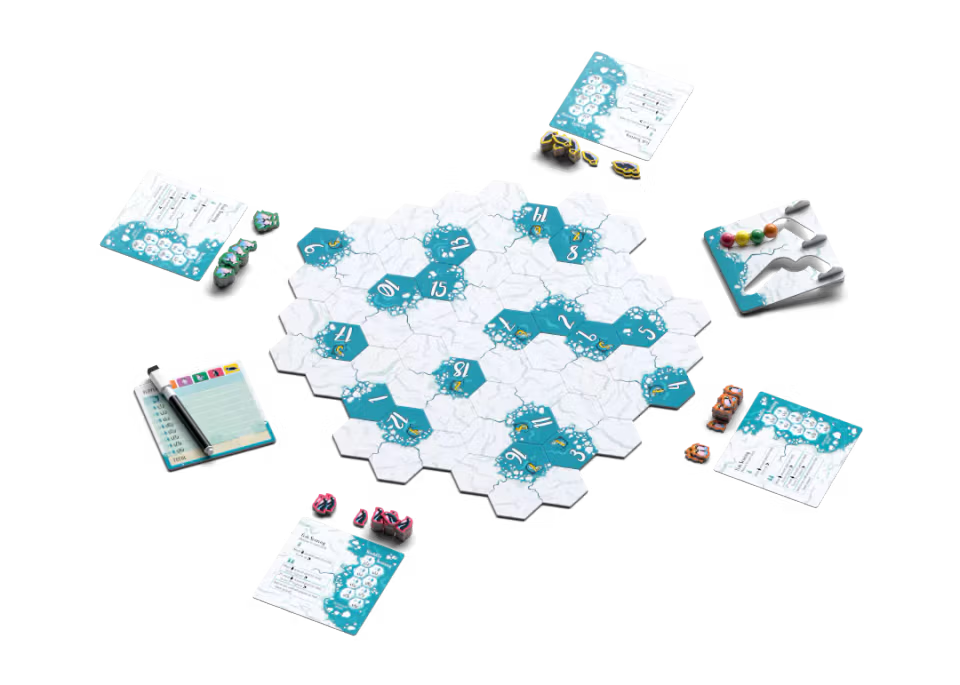
In Cascadia: Alpine Lakes, players are once again building environments that comprise habitat tiles and animal tokens. The habitat tiles here comprise two hexagons rather than one, and there are just three habitat types: forests, meadows, and glaciers. On your turn, you select one of the four habitat-animal pairs available from the table and add it to your environment, placing the animal token on a matching space anywhere in your space (not limited on the tile you just took).

Some hexes don’t show animal figures, but show lakes, which are one of the two main new features in the game. Lakes score 1 point per level, because the other new feature here is that you can build upwards, stacking habitat tiles according to a couple of straightforward rules (the big one is you can’t create a two-level drop from one habitat tile to any adjacent one). You also double a lake’s value if you’ve surrounded it with other tiles, regardless of those tiles’ levels.

Unlike in Cascadia, the animal tokens don’t score by themselves in Alpine Lakes. You score each habitat type based on the scoring card chosen at the start of the game – there are six for each habitat right now – and you can also use three advanced scoring cards if you wish to add a little more variance. The one way in which animal tokens score by themselves is in awarding points to the player(s) who have the highest animal token of each type, meaning one placed on the highest tile level, so there’s a little competition here, especially in a two-player game, to try to deprive your opponent of getting that advantage.

Players get exactly 20 turns, as in the original, and if you’ve played Cascadia you’re familiar with the nature tokens that you can acquire (same method here) and use to break up tile-token pairs in the market or refresh the animal tokens. It’s fundamentally the same game as Cascadia, adding some complexity because you have more choices to make, such as when to build upwards versus expanding outwards, and the relative values of each will shift slightly depending on the scoring cards used in any particular game.

I was already primed to like Cascadia: Alpine Lakes because I love the original so much – I just recommended it to someone with 8-year-old twins, in fact, because it’s so easy to teach and still gives the adults plenty to chew on. Alpine Lakes is a standalone game, but it feels to like like an expanded version of Cascadia rather than an entirely new title – which I much prefer to the “let’s extend a brand with a totally unrelated game under the same title” trend. If you like Cascadia and want something more, especially something a little more challenging, then Alpine Lakes is for you.

Two books about games.

In Playing with Reality: How Games Have Shaped Our World, neuroscientist Kelly Clancy examines how the frameworks of games have affected myriad aspects of human society, and how more recently game theory and related ideas have led to damaging and even ruinous policies that continue today with the mindless (pun intended) push to make everything AI.

Playing games leads our brains to produce dopamine, and games with uncertainty function as variable reward systems, increasing those dopamine surges and further encouraging us to keep playing. Thus we see evidence of games going back to ancient Babylon (the Royal Game of Ur), Egypt (Senet), and Africa (mancala), with games often used as tests of intelligence or readiness for a position as a leader or even as royalty. Such games often included substantial elements of chance, including the progenitors of dice, which led to early calculations of probabilities well before the Europeans started to figure this stuff out in the wake of the Renaissance. Games have evolved over time in complexity, and as they have developed, they have further permeated our non-playing world.

Clancy sets the stage by giving that history and an explanation of what happens in the brain when we play games, including games of chance and games of strategy, and then moves into the more sordid history of games affecting … well, history. She goes into the story of Kriegsspiel, an early wargame that was first developed by a Prussian nobleman two hundred years ago, and after several decades found its way into military leaders’ hands, where it became a tactical training tool for officers in the Prussian and later German armies. Clancy connects it to the Germans’ early successes in World War I and the use of the Blitzkrieg strategy in World War II, both as a way to explain how we can use games to learn and to think more flexibly, as well as how games can lead to unexpected and even tragic outcomes when used without guardrails.

Game theory ends up the main character of the second half of Playing with Reality, as Clancy points out that the way game theoreticians took over much of economic teaching, dovetailing as it did with the myth of the ‘rational’ man, led to decades of policy failures across the world that were based on a set of faulty assumptions about how people would act. (She did not, unfortunately, mention the “it’s time for some game theory” meme.) This idea of “economic man” or “rational man” had a stranglehold on economic instruction throughout the world for decades, well past the point where folks like Daniel Kahneman and Amos Tversky had published research showing that people are in fact not rational, and often fall prey to cognitive biases, leading to results you won’t predict if you’re stuck in the standard model.

Clancy saves some of her particular ire for the AI gold rush and the grifters pushing it, cautioning that these LLMs are not actually exhibiting ‘intelligence,’ and that there’s danger in treating “language like a game without meaning.” Much of what she says about these energy-devouring scams could have been written this week, even though the book itself was first published last year; she decries the lack of regulation or even common sense in many of the uses of so-called AI, and the history of the overapplication of games and game theory to real-life – often treating the world as a zero-sum game, when it is manifestly not – shows how easily we can destroy the world by thinking in those terms. (She cites a specific example from the Cold War, where one Soviet engineer decided to ignore an alarm that a U.S. ICBM was heading towards Russia; the alarm was false, of course, but that one person’s decision, against the ‘rules’ of the game, saved us from World War III.)

Clancy’s focus is on how games are intrinsic to humanity, how we’ve tried to model reality in our games and then taken the games and tried to apply them back to reality, with mixed results if we’re being kind. Mathematician Marcus du Sautoy takes a different approach in his book Around the World in 80 Games: A Mathematician Unlocks the Secrets of the Greatest Games, which may not actually get to eighty games (and certainly not the greatest ones) but does at least provide some interesting histories of games outside of the western canon, truly going around the world to explain the origins and uses of games in Africa, South America, and across Asia. The book offers some superficial looks at the math behind some of these games, but it’s scant, and it’s hard to get away from du Sautoy’s pie-eyed optimism around AI, which he seems to view as an unmitigated positive that will take drudgery from our lives and allow us to play more games.

Du Sautoy succeeds most when he gets a little deeper into the specifics of a game, such as the analysis of which properties are the best ones to buy in Monopoly (the orange ones above all), or the history of tarot cards (which had nothing to do with the woo for which various charlatans have adapted the game), or the stories of games from non-European cultures that were unfamiliar to me, like Sudan’s Dala – many of which have been ‘solved’ by mathematicians, for better or for worse. Du Sautoy writes very much like a mathematician, so when he’s in the weeds, he’s actually clearer and his passion is palpable, but when he starts veering off into philosophy or his almost religious belief that AI is going to save the world, not only is the prose harder to read, but he’s clearly out of his depth.

Both books quote many of the same sources on the philosophy of games, including Bernard Suits’s The Grasshopper and C. Nhi Nguyen’s Games: Agency as Art, which makes their tonal differences more stark. Clancy is the realist here, someone who certainly seems to like games but understands their limitations as models for society as a whole, while du Sautoy is the Panglossian dilettante whose life of relative privilege – his grandfather ran the publisher Faber & Faber and his godmother was T.S. Eliot’s wife Valerie – has perhaps blinded him to the realities of daily life for most people. Du Sautoy does cover more specific games, if that’s where your interest lies, while Clancy has much more to say about games as a whole.

Next up: Staying on a theme, I’m reading Philip K. Dick’s pulpy The Game-Players of Titan.

Jungo.

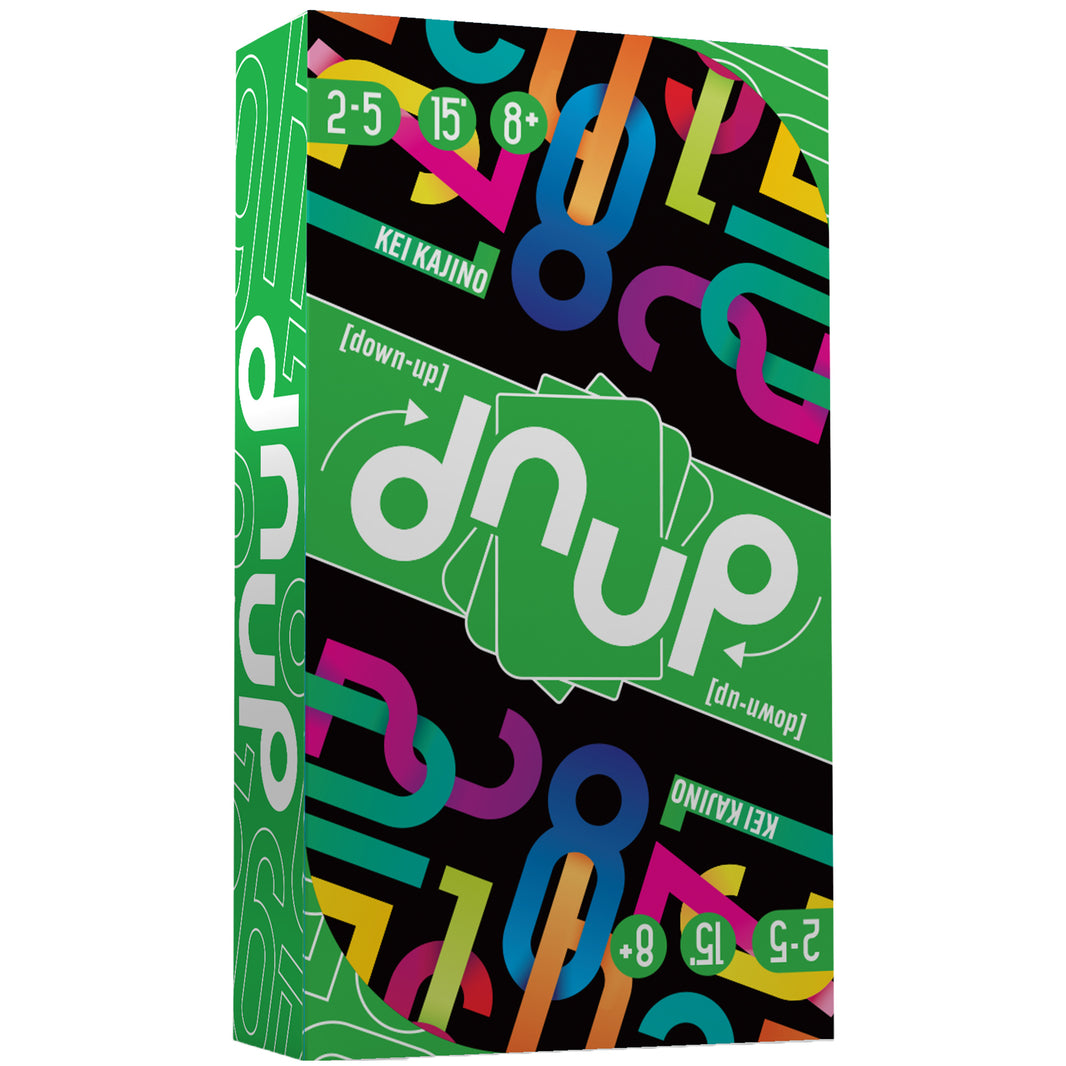
Jungo is the third version of a game that has previously been published in Japan as Hachi Train and Nanatoridori, with very slight changes to the rules each time. It is very much SCOUT lite, with simpler rules, but ultimately much less strategy and decision-making because your moves are usually going to be pretty straightforward. (It’s on Amazon right now, but not Miniature Market.)

Jungo is a “card-shedding” game, like SCOUT or UNO, meaning that the goal is to get rid of all of your cards before anyone else does. You’re dealt a hand of cards from the deck, which has cards numbered 1 through 12 in various colors, and you may not rearrange your hand. On your turn, you must play either a single card or a set of cards of the same number to the table, beating whatever is on the table at that moment. If you’re playing the same number of cards, you must play a higher value. Otherwise, you must play at least one more card than is there already. If you can’t or don’t want to do either of these things, you must pass and draw a card … but if that card allows you to make a legal play, then you can do so immediately. You can also keep the card and put it anywhere in your hand that you’d like, or discard it.

When you play a card or a set to the table, you have the option to take the cards were there into your hand, placing them wherever you want; if not, you must discard them. If all players pass and play returns to whoever played the cards on the table, they discard whatever’s there and begin a new trick. Play continues until someone has no cards remaining in their hand. You can just play a single round, or you can play multiple rounds until someone wins twice for a longer game.

I just don’t see any scenario where I’d choose to play Jungo over SCOUT. Jungo is just too simple – there’s really very little strategy here from turn to turn, as the optimal move is obvious every time. You want to play the strongest set you can to try to get cards out of your hand, both to move closer to having zero cards and to potentially create a new set within your hand for a future play. Because the game only allows sets of cards, and not runs of consecutive numbers, you don’t have as many possibilities within your hand, so picking up cards is less likely to be useful.

I could see an argument that Jungo is easier to teach than SCOUT, since it probably has half the rules of the older game, but I’ve had success teaching SCOUT to non-gamers and to kids, so simplifying it doesn’t have a lot of appeal for me. Your mileage may vary, but Jungo wasn’t for me.

Masters of Renaissance.

Masters of Renaissance might be the game that finally kills Gizmos for me, as it scratches the same itch but is more balanced overall, without a dominant strategy (which is a common but not unanimous complaint about Gizmos) to cut the value of repeat plays. It’s the card-game version of a heavier worker placement game called Lorenzo il Magnifico, which was designed by three of the top Italian designers in the field who are responsible in part for games like Egizia and Tzolk’in, among others. Masters has an extremely satisfying resource management aspect along with simple victory conditions that capture some of the vibe of the original while putting it in a much more accessible package. (Right now it’s only available used in the U.S., such as here from Noble Knight, but it’s available new in Europe, with publisher Cranio selling it for €32.)

In Masters of Renaissance, players will gather four resources to buy development cards from the 3×4 card market. Each player has three columns for those cards, which come in levels 1, 2, and 3; you can only build a level 2 card on a level 1 card, and a level 3 on a level 2. Each development card has a color, a cost in resources, and an action that will be available for the rest of the game.

On your turn, you can choose to take resources from the resource market, which is also a 3×4 grid; to acquire a card; or to activate the visible cards in your play area. The market is one of the best parts of the game: it has 12 marbles sitting in a little plastic tray, with one marble always left out (so sad). To take resources, you pick a row or a column, take the resources matching those marbles’ colors, and then use the 13th marble to push the row/column so that one marble falls out, changing the market for the next player. There are marbles for the four resources, one red marble that lets you advance on the faith track, and white marbles that have no value (unless you get a card that says otherwise).

You only have six spots to store resources you take from the market, however, and if you end up with any resources you can’t store, every opponent moves up one spot on their faith tracks for every resource you have to discard. Your storage has three rows that can hold 1, 2, or 3 resources of one type, and you can’t store the same resource type in two rows. It’s a very tight constraint that I find makes decision-making easier because some moves are just so obviously bad that you can eliminate them from consideration. The storage limit doesn’t apply to resources you get from activating cards, though. Buying a card is just a matter of paying the appropriate resources and placing the card in one of your three columns; if you buy a level 2 or 3 card, it covers up the card below it except for its victory point value.

Activation is the most powerful action, and if you’re savvy about the cards you acquire, you can build a potent little engine even though you’ll never have more than three development cards active at any one time. Most cards let you convert one or more resources into other resources and/or faith points, and there are no cards that leave you worse off – at the very least you’ll swap one resource for another of a different type. Every player’s board has a default action of trading any two resources for one, useful if you can’t get the resource you really need for a future action.

Players also start the game with two Leader cards they may be able to play once they meet the cards’ conditions, which include having certain development cards in your play area, having at least X of a specific resource, or reaching a certain level on the faith track. These leaders are worth additional victory points and most of them give you a new power, like an additional conversion action, a discount on future card purchases, or the ability to take another specific resource when you take a white marble (a double-edged sword given the storage limits).

The game ends when a player builds their seventh development card or reaches the end of the faith track. You then tally up your points from all played development cards, even if covered; any points from leaders; and the highest point total you’ve passed on the faith track. There are also some small bonus tokens on the faith track that you can flip to their scoring side through the call to the Vatican, which isn’t that complicated but which I won’t explain here for the sake of brevity.

I can’t avoid comparing Masters of Renaissance to Gizmos because the cores of the games are just so similar: gather resources in four types, use them to buy cards, use the cards’ powers to convert and/or gain more resources, score the cards for points. Masters of Renaissance can allow a player to run away with things, but it’s a matter of choosing the right cards and getting lucky with what cards are available in the market when you have the resources to buy them. Creating synergies across your cards and leaders is the key to winning, but that’s true for all players, and I haven’t found specific cards that are overpowered, not even the leaders. It doesn’t have the cute marble dispenser that Gizmos has, and it could use better art that made the icons and point values easier to see at a glance. Otherwise it hits every high note, and plays like its own game rather than the poor cousin of another game, which is true of a lot of card- or dice-game adaptations of heavier titles.

TEN.

Somehow I never reviewed TEN, a great small-box card game from the Flatout Games group (Point Salad/City, Verdant), even though I first played it at least two years ago. We broke it out again on Monday and played a quick two-player game, refreshing my memory enough for a writeup. It’s fun, and so easy to teach and play.

TEN comes with a deck of cards numbered 1 through 9 in each of four colors and currency cards of value 1 through 5, with various wild cards I’ll describe in a moment, and black and white tokens used as currency in the game. The goal is to create sequential runs of cards in each of the four colors. You’ll score one point per card in your longest run for each color, and if you complete a run of cards 1 through 9, you get an extra point as a bonus.

On your turn, you flip cards from the top of the deck until you choose to stop, or until you bust by exceeding ten in total value on the numbered cards or on the currency cards (but not combined). If you chose to stop, you can take all of the numbered cards into your hand and all opponents get the tokens shown on the currency cards, or you can take the number of black tokens shown on the currency cards and your opponents get nothing. In the latter case, you move the numbered cards into the ‘market.’ If you take the numbered cards, you then get to buy one card from the market by paying tokens equal to its face value.

If you bust, then the numbered cards go to the market and you get a white token, which is equal to three black tokens. You can use black and white tokens to buy cards or in the auctions of wild cards (put a pin in that), and you can also discard any cards from your hand for a value of one in any purchase action.

The wild cards come in three flavors. One is just a straight wild card, which can be any color and any number of your choice; you don’t have to decide any of this until the end of the game. Then there are wild cards of a fixed number where the color is wild, and ones where the color is fixed and the number is wild. When the active player flips one over from the deck, they pause their turn and a one-round auction begins; the active player will always get the last bid. Then they resume their turn.

Play continues until the deck is exhausted; you alter the size of the deck based on the player count. Then each player picks the values/colors for their wild cards and scores their longest run of consecutively numbered cards in each of the four colors. That’s all there is to it.

TEN works best with more players, of course, as there’s more competition for the cards and within the auctions. You can’t plan on certain cards still being in the market, or know that once your opponent took a green 3, they’re not likely to keep another one, whereas in a two-player game, you’re probably going to get most of the cards you need, and the auctions are anticlimactic. Two-player still works, as long as you are fine with the higher scores and the probability that you’ll both finish at least two nine-card runs.

You can definitely throw this in a bag without the box – you don’t even really need the tokens if you have a pile of coins, and the cards are just a fat deck you can secure with a rubber band – and the teach is super quick. My younger stepdaughter had no problem grasping the game, and in our most recent play I beat her by just a single point, with only a little help required to get her to see how to maximize the points for the wild cards she had at game-end. The push-your-luck aspect of TEN is so fun and so easy for people to understand that I can’t imagine anyone over the age of 7 who wouldn’t be able to play it. I’m going to start bringing it on more trips.

Combo.

Combo is the latest game from new publisher Happy Camper, whose first title was Trio, an import from Japan that is one of my favorite games of all time. Combo’s not quite at Trio level, but it is another very easy-to-teach game that revolves around one pseudo-cooperative mechanic that helps it stand out from the sea of small-box games that arrive on my porch.

Combo is really just a deck of cards in six colors (suits … or fruits, which is the theme of the art here), numbered 1 through 12, with point values on the cards in inverse proportion to the face values. Players will play cards from their hands to the table in each round, and once all players have played the required number of cards, all players determine the most valuable set of four or five cards (depending on player count) they can make from everyone’s played cards. The values are just those of poker: a straight flush beats four/five of a kind, which beats a flush, which beats a straight, which beats an X-high set.

You score points in Combo by having your played cards as part of the most valuable set at the end of each round. So if I played an orange 8, and the best set was an orange flush (we are agents of the free) that included my 8, then I’d take that card and place it face-down in my “full value” pile, which means I’ll get the higher point value printed on the card. There are cases where multiple cards could be used to make the most valuable set, and in those cases of true ties, the players who contributed those cards put them in their “half value” pile and get the lower point value, which is, of course, half of the higher one.

The start player changes each round, and you play until everyone has been the start player twice, as there’s definitely an advantage to going last. The number of cards you play varies by player count, as does the size of the set. There’s a two-player rule where each player plays a card, then you draw the top card from the deck as if a third player played it, repeating that whole cycle, and then each player plays once more so you have eight cards on the table. With two or three players, you play three cards each; with more, you’re playing two. With five or six players, you’re making a five-card set rather than a four-card one. That’s about the whole game. Also, the first-player token is a pineapple.

It’s a little unfortunate for Combo that it came out right around the same time as The Gang, which is also poker-themed, and is just a better game – which is not to say Combo’s bad, not at all, but The Gang is great. Combo is fun, and it’s very easy to teach and to play. You can really just play it even if you don’t entirely get the poker-hand scoring; just about anyone can understand the ideas of sets, runs, and flushes, and you just want to put in cards to muscle in on those so you get some points. Higher cards are more likely to be included in the most valuable group of four or five cards at round’s end, but they’re worth fewer points, so there’s some strategy in what you play when; you may want to hold a better card for your last play to make sure it’s going to get scored.

This is a retheme of a Korean game called Surfosaurus Max, which I’ve never seen, but the rules are identical – Boardgamegeek has them listed as one game, which is a little confusing. It’s a good filler game for the family, or to play with relatives who say they like games but maybe don’t really like most games, just the easy ones. And there’s a place for that in just about any collection.

Cascadia Rolling Hills & Rivers.

Cascadia is one of my all-time favorite games, as it’s incredibly elegant: It has a simple rule set that’s easy to learn or teach, but the play is fun and challenging, requiring you to think on your feet and rethink your strategy on many of your turns. It’s also limited in time, as each player will get exactly twenty turns, and those turns are quick. (You can buy it here.)

Cascadia was a huge hit, too, so it was inevitable that we’d get expansions and brand extensions, including last fall’s roll-and-write versions, called Rolling Rivers and Rolling Hills, the two of which are mostly the same game with just some slight differences in the die faces and the maps on which you’ll be writing. I played Rolling Rivers and it is absolutely fine. It’s a solid roll-and-write game that works well and should be very easy for Cascadia fans to pick up. I didn’t love it, though, and I think it’s missing one of the facets of some roll-and-write games that I especially enjoy.

The theme is where it draws the most from the original game, as you’re going to gather the same animal types from the dice rolled on each turn, and then you’ll try to collect enough to match the requirements of the public habitat cards. You start the game with one of each of the six animal types, plus one nature token. On every turn, all players play at once; someone rolls the four common dice, and each player rolls their two personal dice. One of the common dice has special functions on it that I’ll explain in a bit, but the other dice all show various animals or combinations of animals on their faces. An individual player looks at their own two dice plus the common ones and picks a single animal type to collect, marking that number in the appropriate row on their animal sheet – so if you see three elk on the dice, and you choose to collect elk, you’ll write a 3 in the next open space on the elk line (rather than checking off three boxes, which I think is the more common way to go about it). You then see if you have enough animals to satisfy the requirements of any of the four habitat cards currently on the table. If you do, you may choose to cross off the matching animals and then take the reward(s) from the habitat card: You mark off a completed habitat of that type on your habitat sheet, and then take any associated bonus that was below the habitat card, which might include a bonus animal or some free nature tokens.

The fourth die in the common pool grants some extra power for that round, like letting you use one of your personal dice a second time (as in, counting it again), or letting players collect a second animal type on that turn. The nature tokens let you manipulate the dice for yourself: spend one to turn a single die into the next ‘lower’ animal type on your sheet, spend two to turn it into the next higher animal type, and spend three to take a second animal this turn.

Each game comes with four distinct habitat sheets, and they’re slightly different in the two games. The fundamental mechanics are the same – you write the value of the habitat card you’ve completed in a matching space on the sheet, and once you’ve completed a set or a row or a column, you’ll get an interim reward. The points at game-end all come from the habitat sheets as well, mostly from the cards you’ve fulfilled but with more points coming if you completed specific areas or sets, depending on the shapes shown on that sheet.

What I think the Cascadia Rolling games lack is the chaining of bonuses that make most roll and writes incredibly addictive. Setting yourself up to get three or four or more rewards on a single turn is a huge part of the fun of games like That’s Pretty Clever, Three Sisters, and French Quarter; the fact that the Cascadia games don’t have that just cuts into my desire to play them versus playing one of those others, or some of the other roll and writes I have in the collection. That may be my personal taste, though; it’s the one thing I like the most about this type of game.

There’s nothing remotely wrong with these games, though; if I sound a little down on them, it’s because a) I love roll-and-write games and probably have a high standard for them and b) I really love Cascadia. In the end I wouldn’t choose to play the Rolling versions, even solo, when I have Cascadia …

…which reminds me that there’s an app version now! Dire Wolf Digital are on a hell of a roll lately, with Dune Imperium, Clank!, and now Cascadia as digital board game adaptations in the last year or so. Dire Wolf has never missed for me – every one of their games I’ve tried has been awesome, and Cascadia is as good as all of them. It looks great, is very easy to navigate, offers all of the variations in scoring from the original game, and has a campaign mode with challenges to make it a little more interesting. I didn’t think the AI was that strong, but I also tried a beta version and it’s possible it’s improved since then. I still recommend it, even as a solo endeavor, because it’s so seamless and looks so great on any screen.

Castle Combo.

Castle Combo is the latest in Pandasaurus’s line of imports of smaller-box titles from Europe, following previous hits Sea Salt & Paper and Faraway (the latter of which made my top ten games of 2024). It’s a tableau-builder with a few quirks to the selection mechanism to distinguish it enough from the flood of similar titles on the market, and does share some DNA with Faraway in the way it ultimately scores. It’s from two designers who have another game coming out later this year called Zenith; one of the pair, Grégory Grard, co-designed the 2023 game In the Footsteps of Darwin, which earned a Spiel des Jahres nomination, but which I didn’t care for much because it had about as much to do with Charles Darwin as Monopoly does.

Players in Castle Combo will select nine cards to build 3×3 tableaux in front of them, taking one card from the six on display in each turn. The display itself is split into two rows, one of cards with grey/silver backs and one of cards with tan backs, and you may only select from the row where the messenger token sits. Each card has a cost in coins from 0 to 7?, one or two shields in any of the game’s six colors, an immediate power or benefit, and an end-game scoring function. Players begin the game with 15 coins and 2 keys; you can spend one key per turn to either move the messenger to the other row in the display, or to refresh the three cards in the current row with new ones.

Selecting some cards moves the messenger to the other line

Those immediate powers can give you coins or keys – more on those in a moment – usually based on what else is in your tableau already, or other benefits like 1 coin discounts on silver -or tan-backed cards. The end-game scoring is much broader, as nearly all cards give you some number of points per something else in that row, or column, or your tableau as a whole, or where you placed the card, or if some shield color is missing, or too many other things to list. It would be such a point-salad disaster if it weren’t limited to just nine cards all neatly arrayed in a square.

If you can’t afford any cards, you must take one and play it face-down for 6 coins and 2 keys, receiving 0 points for it at game end. After the ninth round, players score all of their face-up cards according to the rules on each. Leftover coins have no value unless the player has ‘purse’ cards on which you can store gold during or after the game; coins not in purses do come into play as the tiebreaker. Leftover keys are worth 1 point each.

There isn’t a ton of player interaction here, which is fine given the number of things you have to track and consider on your turns. Before choosing a card, you have to see how many coins you have and how many you’ll have afterwards (since many cards give you coins back), and then consider its immediate and end-game effects while also figuring out the optimal place for it in your tableau. Actually, you’ll do that for many or all of the six cards on the market at that time; trying to also figure out, say, which cards your opponents might want, or which ones might hurt them more, would be overload for a game of this weight.

The theme doesn’t tie all that well to the game, although I appreciate the comic nature of the art on the cards. You’re supposed to be collecting characters from the upper and lower classes of your city to come live or work at your castle, but even though each card has a character type I find I play without ever even looking at the text. It’s all about the abilities and how they fit into my tableau at that point or will determine my strategy for cards going forward.

Castle Combo plays 2-5 players and promises playing times of 10-25 minutes; I think 10 minutes might apply to a game of two players who’ve played a few times before, but the 25 minutes is probably about right as an upper bound. You only have nine turns and you have just a few choices on each turn, so even though you will find you’re putting a lot of thought into each buying decision, there’s only so much of that you can do before the next player smacks you in the back of the head. I do prefer Faraway, which has a similar weight, playing time (eight turns per player), and even box size, because its main mechanic is more novel. Castle Combo takes a lot of aspects of other games and skillfully smooshes them together into a smart filler-game experience.

Top 20 board games of 2024, part two.

My annual post of the top 10 games of the year is now up over at Paste. Compiling that list has gotten harder each year, because I play more new games in a calendar year than before, and because there are more games coming out each year – good and less good. I started out with 17 possible titles for the top ten, cut it down for Paste, and then decided to throw together a second post here with the next ten. I’ll just reiterate that there are also games that came out in 2024 that I didn’t play but that might make the list based on what other people have said about them, what I’ve seen, and what the response and ratings are for the games on Boardgamegeek.

11. Harmonies

This might have made my top ten if I’d ever played the physical version, but I’ve only played it on Board Game Arena, and I think I really need to see the physical components. It’s a simple game with tight, medium-complex scoring, taking the general gist of Calico and making it somehow a little more forgiving without taking away what makes Calico good. On each turn, you take all three colored tokens from one spot on the board, and then place each of them on to spots on your own little map of hex tiles, with each color representing a different terrain type with its own placement and scoring rules. You can also select a new scoring card if you have room, with a maximum of four at any time, although once you fill all the spots on any scoring card you can set it aside and draw a new one. The game continues until someone has two or fewer empty hexes remaining. I’m also not 100% sold that all of the starter scoring cards are balanced, but that aside, it’s a wonderful thinker of a game, and really easy to learn – just hard to play well.

12. Dracula vs. Van Helsing

A great asymmetrical two-player game where the players play with the same deck of four colors with cards numbered 1-8 but have different goals: Dracula wants to kill four humans in any of the board’s five districts, while Van Helsing wants to drain all of Dracula’s hit points before that happens. To set up, each player draws five cards and lays them on their side of each of the five regions in the order in which they were drawn. Each number has a specific power that activates when you discard it, so on your turn, you’ll draw one card and either replace a card in front of you (discarding and activating that one) or discard the newly drawn one (activating that). Once the discard pile has at least six cards in it, either player can choose to end the round, giving their opponent another turn, or end it immediately by discarding a value-8 card. It’s surprisingly balanced for its asymmetry, and extremely tense like a sudden-death overtime because the game can end at any time. (Full review)

13. Harvest

A reworking of a 2017 game published by the now-defunct Tasty Minstrel Games, Harvest streamlined some rules and made the boards and components much nicer while retaining the “kinder Agricola” vibe. You’ll place three workers in each of the game’s four rounds, gathering and planting seeds, collecting water and compost, tending plants, and harvesting them, while also clearing more land and building buildings for powers and points. The core of the game is in the plants, but there are multiple ways to win here; you can focus on certain plants over others, or go heavy on buildings, and so on. It’s not as punishing as Agricola, which has a huge penalty if you can’t feed all of your family members at the end of certain rounds, but you can still end up knee-deep in compost if you don’t manager your resources well. (Buy it here)

14. Gnome Hollow

Gnome Hollow was a huge hit at Gen Con with its bright, colorful components and combo of route-building and set collection. You draw and place two hexagonal tiles from the market on every turn, placing them on the map all players are building in the center of the table, and then move one of your two gnome workers to take an action – claiming a path in progress, selling mushrooms at the market, gathering a flower, or visiting a signpost to grab some extra mushrooms. When you complete a path, you get the mushrooms shown on the path, and then you move one of your path tokens on your board, gaining a bonus if the path covers 5 to 7 tiles, and scoring more points at game-end the more ring tokens you’ve moved. The scoring is extremely simple, and there’s plenty of interaction on the map and in the competition for the best spaces at the mushroom market. It’s a very solid game across the board, pun intended. (Buy it here; full review coming in January.)

15. Castle Combo

I find it hard to separate this game entirely from Faraway, as they both came from the same US publisher/distributor (Pandasaurus) in almost exactly the same box size with similar cartoonish art. The designers aren’t the same, and the games don’t have a ton in common other than one trait – you will play cards early that will determine your card choices later on, because they only pay out if you get the right cards and place them the right way. You’re all building a 3×3 grid of cards, selecting from two rows, and on your turn you can only select one of the three cards in the row where the Messenger sits. You can pay a key to move him or to refresh the cards in the row. You pay the price in gold to buy a card and then place it wherever you want, usually getting some immediate return in gold or keys (with some other possibilities), and then earning points at game-end from that card based on what else is in its row or column or just your whole tableau. It’s just 9 turns and managing your resources while ensuring you snag the card you need keeps the game tense right to the last turn. These two designers have a very promising new game, Zenith, coming out next year from the company that published the next game on this list. (Buy it here)

16. Captain Flip

The first release from PlayPunk, the new publishing imprint from designer Antoine Bauza (7 Wonders, Tokaido) and Thomas Provoost (co-founder of the publisher Repos), Captain Flip is a light family game where players try to fill their pirate ships with different crew tiles. Your ship has five columns of varying sizes, anywhere from one to five spaces high, and the powers or rewards of tiles you place often depend on what else is in that row or column. If you don’t like the crew member on the tile you drew, you can flip it to the other side, but then you have to play that one, even if it might hurt you to do so. One character, the Gunner, gets you 5 coins (points) when you play it, but if you have to place your third Gunner, you lose immediately. It was one of the three finalists for this year’s Spiel des Jahres, losing out to Sky Team. (Buy it here)

17. Fairy Ring

This might deserve to be a little higher but I need to get more plays in before deciding. It is a really clever family-level game that blew away my expectations in terms of its strategic depth – the rules are simple, but you can play it pretty seriously regardless of your age. Players play mushroom cards to the area (village) in front of them, stacking them by type if you wish, and then moving their fairies around the table based on the number on the card they just played, passing through all players’ villages and taking points from the card on which they land. If your fairy ends up on one of your own mushrooms, you score based on the mushroom type. If it ends up on another player’s mushroom, that player gets points, and you only score if you have at least one of the same mushroom type in your village. The game has two seasons with different decks, bringing higher numbers in the second deck. Each season has six rounds, so you get just twelve rounds in total, limiting the game time. The big strategic question here is how to set up your village to maximize your points without handing too much to your opponents, with all the information out for players to see, so everyone can follow that plan if they wish. (Buy it here)

18. Seers Catalog

Seers Catalog is a card-shedding game where you play tricks to try to get rid of most of your cards – someone objected to me calling this a “trick-taking” game because you don’t take the tricks, but you do play them, so sue me – but not all of them. If you have five or fewer cards remaining in your hand at the end of the round, you gain points equal to the face value of the lowest card in your hand. Then all players lose 1 point per card in their hands. The catch is that once you’ve got 5 cards or fewer left, you can’t pass during a trick – you have to play if at all possible, so someone else can potentially bait you into playing your last card. There are two ‘artifact’ cards with 0 value (mostly) but special powers that spice up each game as well. Seers Catalog is also quite unusual for a trick-playing game in that it works well with two players. (Full review)

19. Pixies

Designer Johannes Goupy made my top 10 with Faraway and also designed 2023’s very solid Rauha and the complex game From the Moon (which I haven’t played), and he’s here as well with this wonderful small-box game for just about all ages – maybe 7 and up, to put an actual limit on it. The whole game is a deck of cards in four colors, numbered 1 through 9, and you can only play a card face-up to its matching space in your 3×3 tableau. If you can’t or don’t want to do so, you can flip the card face-down and put it anywhere. If you place a card in its proper space on top of a face-down card, or a space that already has a card of that number in it, it’s “validated” and scores its face value. You also score the net of the various positive and negative symbols on all of your face-up cards, and score for the largest contiguous area of one color. You play four rounds, one for each season, with the area bonus increasing in each round. The card-drafting mechanic (very similar to Faraway’s) gives you some real player interaction, too. (Full review)

20. Life in Reterra

Earth is on the rebound, as some unstated disaster has led to a world where humanity has to start over. In Life in Reterra (get it? it took me way too long), players place terrain tiles with various symbols on them that allow the placement of citizens, relic tokens, or buildings, the last of which can give you additional powers or gain you extra points. The real strength of Life in Reterra is its flexibility: in every game, you choose five buildings to use, taking one of the three recommended sets or just mixing and matching as you please, as long as you match all five required building shapes. Once everyone has filled their 4×4 grid, you score. It’s got a longer runway with the various building tiles’ rules, but the game play itself is very quick. (Full review)

Honorable mentions: Courtisans (full review), River of Gold, Parks Roll & Hike (full review).

I may receive a commission from any affiliate links on this page.

Zoomies.

Zoomies is a new Kingdomino-like game of tile-laying with a cutesy puppies theme that underscores this game’s main appeal to kids. It’s very light and you only have eight turns in the entire game, but there isn’t a whole lot of opportunity for strategy within it, making it a bit of a chore for the adults to play.

In Zoomies, players will place domino-like tiles that have two squares on them showing any of five different dog types, with some squares also bearing special symbols for bones or for dogs with zoomies. (If you’re unfamiliar with this phenomenon, it’s when a dog gets so excited by something they run around like crazy for a minute or two to get the energy out. My dog does this pretty much any time someone comes home from an absence of more than an hour.) You must place a tile so that at least one square on it matches an adjacent tile already on the shared tableau, after which you get to place one of your eight scoring tokens on the tile.

There are four varieties of scoring tokens, which are two-sided, so you don’t have to use all four kinds over the course of a single game. The Leader token lets you claim a “pack” of contiguous squares of the same dog type (and background color), scoring one point for every dog within the pack at the end of the game. The Bones token gives you two points for every dog within that pack (which may have a Leader token on it, even from another player) with the bones symbol on it. The Frens token points to an adjacent dog type, and scores you two points for every dog of that other breed that touches the pack where the Frens token sits. The Zoomies token scores you an escalating number of points based on how many adjacent dogs of any breed have the zoomies icon on it, up to 15 for a group of 5 such squares.

You must place a tile and a token on every turn, so the game only lasts eight rounds, by which point the tableau takes up a lot of the table, anyway. Because the tokens are two-sided – Leader/Zoomies and Bones/Frens – you do have an added decision to make when choosing a token to place, since it eliminates the chance of using the other side in the future. The opportunities for any kind of planning are very limited, however, and you usually don’t have many options on your turn that make any sense. My stepdaughters liked the theme, but the older one seemed to lose interest in the game as it went along, and my wife and I both agreed the gameplay was thin. Depending on who’s playing, I think I’d rather play Kingdomino or the excellent kids’ version, Dragomino.