Stick to baseball, 8/29/26.

Over on the Athletic this week, I had a new minor-league scouting notebook, covering some Mets, Orioles, Nats, and Phillies prospects, including two guys the Mets just acquired at the deadline. I’ll have another one early next week. I’m not bylined but I did contribute to this newser on Walker Jenkins’ first callup.

You should sign up for my free email newsletter, which I’m hoping to get back to on Monday. For socials, I’m still mostly on Bluesky, Instagram, and TikTok.

And now, the links…

  • Longreads first: This New York cover story on the proliferation of travel teams for young athletes, and the harm it’s doing to our kids (at great cost to the parents), is a must-read for anyone interested in sports, even professional ones, because this is how we fumble our future and create leagues full of the privileged at the expense of anyone unable to access this narrow pipeline. I have long had a personal policy to avoid pay-to-play events, but it’s a little easier for me because the amateur players I’m seeing are the best of the best.
  • German actress/journalist Collien Fernandes was being stalked and impersonated online by someone sending men explicit images and videos purporting to be of her. It turned out her assailant was her husband.
  • A Christian cult in Idaho called Followers of Christ keeps killing its babies by ‘praying’ instead of seeking medical care, and Idaho law lets them do it.
  • There’s been a lot of attention over the two reported deaths from measles in Pennsylvania, but that’s the tip of a giant iceberg. There’s an outbreak in Wisconsin now, almost entirely among unvaccinated people, with 41 reported cases.
  • Finland had set a goal to end homelessness by 2027, and was well on its way there until a right-wing government took power in 2024 and started cutting social welfare programs, reversing a long-standing decline in the country’s homelessness rate.
  • Rep. Max Miller made a writer delete a tweet that said he had broken his toddler daughter’s collarbone. She did so, because this remains an allegation, and in response she wrote about a bunch of violent things he’s done to women that are not mere allegations.

Operation Barclay.

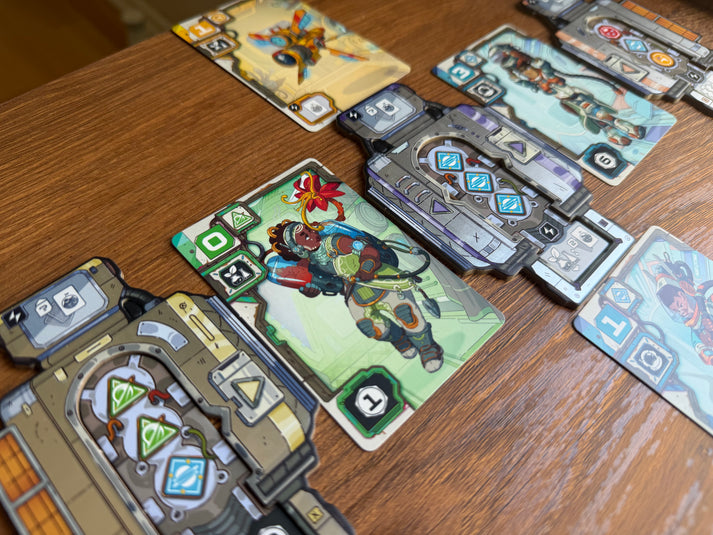
Operation Barclay the board game is indeed based on Operation Barclay the military con, where Allied forces concocted an elaborate deception to fool the Axis powers into thinking their attack on southern Europe would come through the Balkans, rather than through Sicily. (If you’ve heard of Operation Mincemeat, it was part of Operation Barclay.) This two-player asymmetrical game has the players playing as Allies and Axis – not Axis & Allies, that’s an entirely different game that takes about ten years to play – where the Axis (Abwehr) player has a limited number of rounds to guess where the Allied (LCS) player’s attack will be, as well as where their backup location is. (As I write this, the game is on sale for $10 at 25th Century, 75% off the regular price.)

Each of the five theaters on the map of Europe gets five face-down evidence tokens, placed by the Allied player, which come in red or green. The Allied player’s primary area for attack gets four green tokens and one red; their secondary area gets three green tokens and two red; the other three areas get two green tokens and three red apiece.

The game play in Operation Barclay revolves around a sort of modified poker; the players will draw up hands of five cards, playing three cards face up, then playing two face down, with a betting phase in between that allows you to bet that your opponent will have the better hand. At the end of each round, the players divide up the available evidence tokens for that round, based on who has the stronger hand, who has more symbols on their cards, and who bet correctly on which player would end up with the stronger hand.

The Axis player then gets to flip over as many tokens on the map as they have collected evidence tokens in that round. Once they’ve flipped enough tokens to identify the two areas where the Allied player has planned an attack, they win the game; if they fail to do so after six rounds (months), the Allied player wins the game.

Not to bury the lede too much, but I couldn’t get there with Operation Barclay. There are some good ideas in the game, especially the deduction part around the evidence tokens, but I don’t think the poker aspect works, especially since there’s going to be a huge luck component there, and I’m already kind of over poker as a game mechanic anyway. I also think the game is a little unbalanced towards the Allied player, but that could be just a matter of needing more plays.

The deck does have some features that make this more than a poker derivative. Many cards have special powers that might let you draw two cards and keep one, or shuffle the three cards on top of the discard pile called the double-cross deck; some of these cards have number values, while others don’t, meaning they can’t help you form a better poker hand. Some cards have multiple values on them, so you can decide which one to use when you reveal your entire hand. (This also makes it possible to get five of a kind.) There are suits matching the various theaters, so you can still get a straight flush, although the game doesn’t appear to count a flush as anything. And some cards can only be played in the first phase, when you play three cards face-down, while others can only be played in the second phase, when you play your last two cards face-up.

There’s a decent idea here in the logic-puzzle mechanic for the Axis player to figure out where the Allies will attack. I think in the end I wish designer Maurice Suckling, who is mostly known for wargames, had done something other than use this poker-adjacent mechanic to determine how the Axis player gets to reveal tokens, not just because it’s incongruous with the theme, but because it doesn’t make the game that fun to play. I love deduction in games, and I wish Operation Barclay had more of it and less Axis Hold ‘Em.

The Anniversary.

What if each unhappy family is, in practice, unhappy in fundamentally the same way? Can you reduce all familial unhappiness to a simple formula of cruelty, alienation, and poor boundaries?

Andrea Bajani presents us with one very unhappy family in The Anniversary, refusing to even name his characters, as the now-adult son of the family marks ten years since he last spoke to either of his parents. He retells their story and his in sparse but significant terms, painting the picture of a marriage marked by power, control, terror, and maybe even violence, but in a voice that allows the narrator to examine his own feelings through two lenses, how he felt at the time and how he feels now with the benefit of time and distance.

The narrator’s father is the obvious villain in the story, as he is cut from similar cloth to David Melrose in Edward St. Aubyn’s Melrose novels and Sam Pollit in Christina Stead’s The Man Who Loved Children, terrorizing first his wife and then his entire family with his outbursts, his vicious tongue, and later his delusions, like believing he’s capable of giving his enemies cancer through his mental powers. The narrator begins with his parents meeting, telling how his mother was actually the more educated one, heading to university when her husband-to-be dropped out of high school, dreaming of a job as a teacher while he had to take a sales job because it was all that was available to him. He compensated for this power imbalance by taking her down through his words, eventually pressuring her into abandoning her studies and her hopes of a career so she could be first his servile housewife and later a stay-at-home mother to the two children they would have in quick succession after marrying. The husband set a perimeter around his wife and tightened it slowly over time, limiting her contact with her own parents, then her friends, and eventually isolating her almost completely in their apartment until the children were nearly grown.

The narrator was a witness to much of this behavior, but did little to stop it or push back until he was much older, and even in early adulthood remained obsequious to his domineering father and cipher mother, still largely obeying his father’s wishes or orders well into his 30s. His slightly older sister, from whom he is also estranged, although less strictly so, couldn’t get out of that environment quickly enough; there’s much less on their relationship, but it is clear from the hints Bajani drops that it’s also quite complicated, with resentment in both directions, her willingness to protect him somewhat as a child turning into disdain for his obeisance to their father in adulthood.

Part of the spell that The Anniversary casts comes from Bajani’s use of small moments in conversation to stand in for the giant breakpoints you might expect given that the narrator tells us in the first chapter that he has cut ties with his parents. There is, in fact, one almost-certain story of physical abuse here, but it isn’t an impetus for anything – in fact, the perpetrator ends up forgiving the victim in a perversion of the normal order of things, further underscoring how skewed these internal relationships are. Every time there’s a large shift in any of those relationships, husband to wife, husband to son, or wife to son, it’s over something modest, maybe a sentence spoken, sometimes something not spoken. The final conversation between son and parents, after which the narrator decides to change his phone number (we’re in the pre-cellular era), feels so small, hinging on one thing his father says, but it sits on a mountain of decades of lived experience.

The Anniversary won the Strega Prize, Italy’s equivalent to the Pulitzer Prize for Fiction – winners include The Leopard, The Name of the Rose, and The Solitude of Prime Numbers – this year, and comes out in English tomorrow. (I received a review copy from the publisher.) Like many other recent winners, it’s quite short, only 135 pages, and punches well above its weight thanks to its economy of prose. Bajani has crafted a scenario that feels specific yet applicable to so many families, real or constructed, where power imbalances or insufficient boundaries fester over time, and nobody makes a real move to change them because so many people are just conditioned to accept family, whatever it may look like.

I was probably predisposed to like the novel anyway, given my affinity for Italian literature, but The Anniversary is superb. It’s incisive, thoughtful, and, despite its bleak subject, gripping right to the end.

Next up: Emily Tesh’s The Incandescent, one of the nominees for this year’s Hugo Award for Best Novel.

Enchanted Ivy.

Packing a series of puzzles into its small box, Enchanted Ivy is easily one of the best pure solo games I’ve ever played. Coming from first-time designer Sarah Joshua, the game presents you with a seemingly simple challenge – build your tableau of ivy cards while placing guests on half of them in a way to maximize your scoring – that becomes increasingly difficult because of how well-designed those guests’ scoring methods are.

The gist of Enchanted Ivy is simple. Each ‘chapter’ presents you with a pattern of cards and a set of guests you’ll use in that game. On every turn, you’ll draw two cards, playing one with its door side and one with its ivy side (they’re called balconies and walls, but I don’t think those names are that intuitive), and will place one of the two guests in your hand on the door you just played. You’ll then draw a new guest from the bag and begin the next turn. You also begin the game with one bonus door that you can place on an ivy card at any point for 3 extra points, although it may end up costing you points on a nearby guest card. At game end, you must have played your cards in the pattern shown, and then you will score every guest according to their wishes.

That’s the whole game, although there are additional doors you can earn as you move through the campaign to get some extra powers. (I have only obtained the first one so far, and it’s quite useful). You can learn this game inside of five minutes, but playing it well enough to reach either the minimum victory score or the higher score for mastering the level is quite difficult, as the guests nearly all work against each other, and they tend not to appear from the bag when you need them, but whenever they feel like it. Jerks.

Each chapter also offers two additional bonus conditions that make winning it more difficult, but allow you to place stickers on a cardstock page of shelves; when you complete a shelf, which requires at least three stickers, you gain the associated bonus door. You don’t have to do those, but I wouldn’t want to pass up the additional abilities you get from those, and those stretch goals – see what I did there? – give chapters more replay value.

Enchanted Ivy’s design is extremely tight, in the best possible way. You have only a few options on each turn: which card to play ivy-side up, which of the two guests in your hand to use, and where to place the two cards within the pattern that chapter dictates. Once a card is placed, it’s there for the game, so you may get locked into a decision early in the game that costs you points – maybe a lot of points – later in the game. Some chapters have more ornate patterns, such as including gaps between cards, which make some guests happier and others quite irked. (Many of the guests are Garbo-esque, as they want to be let alone.) The first two chapters include scarecrows, inert guests who can help others score but are worth zero points on their own.

Because there’s so much randomness involved in the card and guest draws, you can play a chapter multiple times, to boost your score or just see how it goes with different sequences. The base game comes with eleven chapters, including the teaching game in the prologue, while there’s an expansion (which I haven’t played) already with three more chapters and some new guests. It’s going to take me plenty of plays to exhaust what’s here in the base game. My only quibble is that it’s a bit of a table hog for a solo game, at least if you want to have the guests’ scoring cards – which are beautifully rendered, but large – out on display while you build your tableau. Among purely solitaire games I’ve tried, Enchanted Ivy has only one rival for the top spot, Coffee Roaster, which has a better theme for me, while Enchanted Ivy is a more elegant design. So where’s the Wrigley Field tie-in? Enchanted Ivy is an A- game, and I’m not really sure if I could ever actually give a solitaire game a pure A anyway.

Stick to baseball, 8/22/26.

My only piece at Athletic this week was a contribution to this news story on Kade Anderon’s imminent promotion, although I did get to some games and will be back to writing scouting notebooks next week when I get to at least one more.

I appeared on NBC News to talk about Tommy John’s legacy, and on Bleed Dodger Blue to talk about the Dodgers’ farm system and recent trade for Tarik Skubal.

You should sign up for my free email newsletter. For socials, I’m still mostly on Bluesky, Instagram, and TikTok.

And now, the links…

  • The New Yorker looks at the legacy of Nobel Prize winner Carleton Gadjusek, who won the award in Physiology or Medicine for his work on the brain-wasting prion disease kuru, but also used his research trips to find young boys to bring back to the U.S. so he could molest them.
  • ICE agents also detained the Padres’ minor-league catching coordinator, claiming he had remained in the country illegally after his work visa expired. I’ll be very curious to see how MLB responds to this, given their obeisance to this Administration and its ideas on many other fronts.
  • 404 Media dropped a tracker in shipment of rare books to see which AI company bought it. The answer was Amazon, which then destroyed the books after scanning them.
  • Some board game kickstarters of note: Whisperwood is a sprawling bag-building game that can take up to 3.5 hours, to be published by Cardboard Alchemy (Flamecraft).

Crashed Out.

Crashed Out is a new $10 card-shedding game with a memory component as well as some hidden cards, playing very quickly and allowing for a little strategy because many of the cards in the deck either have immediate effects when discarded or allow you to ignore them if you collect enough. It’s a little similar to Cabo and the Silver series, but plays faster, and sits more on the bridge between a card game and a party game than those titles do.

The goal in Crashed Out is to have the lowest total value of your cards when the game ends, so most of the time you’ll be trying to replace high-valued cards or cards of unknown value with low-valued cards. The game ends when one player decides they’re good with their cards and says “Crash Out!” or when any player discards the single value-20 card in the deck.

You begin the game with six cards face-down in front of you in two rows of three. You can look at the first row before you, but just once. On each turn, you draw a card from the deck, and choose to discard it or to keep it and discard any other card from your tableau, in which case you reveal the discarded card. If the card you discard is a 6, 7, 8, or 9, you must take the action shown on the card: 6 lets you draw a card and put it face-down in front of an opponent, 7 and 8 allow you to peek at any card in front of any player (including you), and 9 lets you swap one of your cards with an opponent’s.

If you discard a card and you have one or more matching cards in your tableau, you can discard those as well – and so can other players, even though it’s not their turn. If, however, you discard a card that doesn’t match, you take it back and draw another card, without looking at it, as a penalty.

The deck has cards valued from 0 through 12, 15, and the lone value-20 card. Cards 0 through 9 always count towards your total points at game-end. The cards valued 10 through 12 also count for their face values unless you have a set or three or more, in which case they all cancel each other out.

If a player is satisfied with their cards, they can call “Crash Out!” to end the game, after which each other player will get one more turn. The player who called the end takes the Shield card, so other players can’t give them new cards or swap cards out on those final turns. However, if someone discards the 20 card, whether or not they did so deliberately, the game ends immediately.

The result is a game that’s very fast-moving, offers a little bit of strategy, and gives you the social aspects of surprise moves, take-that tactics, and the occasional mistake. I’m not a party-game person in general because most party games are kind of dumb, especially ones that try to make you cringe, or that rely on inane questions. Crashed Out is a party-adjacent game that makes you think, as if someone took Scout or the aforementioned Cabo and reimagined them as highly social instead. It’s a grade B+ game for me, which is about as high as I’ll go on anything that bills itself as a party game.

Stick to baseball, 8/15/26.

Just one piece from me at the Athletic this week, my story on how and why Catan Studios is forging partnerships in the sports world. I’m on PTO right now, so I won’t be posting anything there for a few more days.

I sent out a fresh edition of my free email newsletter on Wednesday. For socials, I’m still mostly on Bluesky, Instagram, and TikTok.

And now, the links – heavy on the NY Times this week…

The Buffalo Hunter Hunter.

Stephen Graham Jones’ The Buffalo Hunter Hunter might be the most overtly violent novel I’ve ever read; it certainly is if measured by the volume of blood spilled, since it’s a vampire story at its core, but one Jones uses to retell the story of the Marias Massacre, in which U.S. troops killed about 200 Piegan Blackfeet women, children, and infirm or elderly men who were in their undefended camp. It’s a story of revenge and grief and the endless toll of genocide, where the American colonizers saturated the ground of the west with the blood of humans and buffalo, and where the vampire is both hero and monster, avenging his people while leaving destruction and death everywhere he goes. (It won the Nebula Award for Best Novel this year.)

The novel opens in the present day, as Etsy Beaucarne, a professor trying to complete a research paper that will improve her tenure application, obtains a long-hidden manuscript that was written by her great-great-grandfather Arthur Beaucarne, a pastor in Miles City, Montana, in 1912. A desecrated corpse was just found outside Miles City, and another will be found shortly, with no clues at all as to who has killed these men or why. Arthur is then visited by a peculiar Native American man named Good Stab, who wears sunglasses all day, who refuses to eat or drink what Arthur offers, and who says that he is there to confess, apparently familiar with the Catholic sacrament of penance. Over the course of many days, Good Stab describes how he was killed by a white man, but lived, thanks in some way to the supernatural powers of the vicious killer known as the Cat Man, and went on to become a vampire – almost immortal, feeding only on blood, but in this case taking on some characteristics of the creatures on which he feeds, with the blood of his own people the most powerful for healing and for providing him with strength and energy. Good Stab begins his undead life as an instrument of vengeance for the Blackfeet people and the buffalo, killing every trapper and hunter he finds and destroying their traps and weapons to prevent others from using them, but as time goes on, he becomes more wanton in his killing until an eventual Boss Battle with Cat Man himself that takes place over several years.

Meanwhile, Arthur has his own demons; he has not killed, but he was there at the Marias Massacre, and is carrying a heavy load of guilt and shame for his failure to do anything to stop the murders of innocents, which in turn led him to take up the cloth as a form of penance of his own. His voice is quieter than Good Stab’s, and he is especially weak next to the superhuman strength of his penitent, but he stands in as the voice of those who stood by and watched as their fellow colonizers wiped out entire peoples across the Americas along with decimating the buffalo population.

Jones chooses an epistolary-adjacent format – they’re not truly letters, but Good Stab’s soliloquies interrupted by diary entries from Arthur – in what I presume is an homage to Stoker’s Dracula, an epistolary novel itself that comprises letters and diary entries as well. Where Stoker’s vampire is pursuing women in a sort of sexual conquest, killing his first victim to make her a vampire as well, Good Stab’s violence is aimed primarily at men, first at the white men who are destroying his people and their way of life, and then later at anyone who can sate his thirst and keep him alive. His desire for vengeance ends up destroying his inner self, which might be a soul in another context.

The novel is extremely violent, to a level that makes Cormac McCarthy’s violence seem mundane. Blood is, of course, a core part of the plot, and the most obvious symbol in the book, but the ways in which Cat Man and Ghost Stab kill beyond just getting the blood they need to heal and survive are gorey and often stomach-churning. I understand that some of this is just Jones’ representations of the depredations of genocide; I’m sure the colonizers did these things and worse to the natives they abused and murdered. It doesn’t make it an easier read, especially when Jones lingers on some of the more violent deaths.

The Buffalo Hunter Hunter is also heavy with metaphor, starting with the blood itself, a symbol of life and the importance of family, clan, and tribe. Good Stab drains his victims of blood, leaving them empty, lifeless shells, not dissimilar to how the colonizers leave the ancestral lands of the people they wipe out – people for whom blood ties hold stronger meaning. Skins, and taking the skins of animals and later people as ‘robes,’ appear as a metaphor for race and the artificial distinctions between people, even people who should ostensibly be on the same side. It’s a novel replete with the kinds of literary techniques that will make it fodder for academic papers for years.

I’ve largely avoided giving anything like an opinion so far on The Buffalo Hunter Hunter¸ because I am of two minds on the book. It is a powerful fable, a searing indictment, a retelling of a shameful moment in the history of the United States. It’s also violent as hell, to the point of distracting from what I interpreted as its aims, and Good Stab’s remaining humanity is often hard to see through the blood, making him a less compelling character than he might have been had he been more discerning in his choices of victims. The chapter where he and Cat Man have their ultimate fight goes on too long, while the final conversation between Good Stab and Arthur is probably too short. I recommend it, with qualifications. It is a strong work of contemporary and indigenous literature, and it’s also very hard to stomach in many parts. Your tolerance may be quite different from mine.

Next up: Percival Everett’s God’s Country.

Mythologies.

Mythologies is an upcoming game where players draft cards from four different domains to build out their tableaux, with a loose civ-building theme that ultimately comes down to its novel card-drafting mechanic. It’s a quick-playing game with some simultaneous actions, where players will only draft eight cards over the game’s four rounds, with a lot of the action happening on your 3×3 tableau, which can allow you to add, stack, or discard cards for points or currency. It’s a lot of game for its size, although in the end I found the point-salad aspects a little overwhelming.

Mythologies comes from two new designers, one of whom has a credit for a deckbuilding game I don’t know and the other has no other credits on BGG, and does do something I haven’t seen before in the card-drafting mechanism. Each player gets three tokens, two Yes and one No, to use during each round. There are four areas on the common board from which you can draft, and you’ll be randomly assigned one of those for this turn – you can only take a card from that area this time, cycling through all four during a single round. You secretly choose one token for this turn, and then everyone reveals whether they wish to take a card from their area or pass. You can only take two cards total per round, so you’ll have to pass twice no matter what.

At the end of the round, you take the two card you drafted and place them wherever you wish on your 3×3 board, taking the reward(s) shown on the left side of the card based on the rows in which you placed them. You can also gain rewards from finishing a row or a column, and then you can use any power written in the text on the bottom of the card, which often involves a secondary condition such as whether there are cards above or below it in the tableau or whether it’s stacked on other cards. These powers may call on you to even discard a card, or move cards around, or “crush” cards on your tableau by piling cards on top of it to gain points or gems.

Cards may have immediate one-time powers, ongoing powers, or end-game scoring effects. Some cards also require you to pay a cost first, usually in gem tokens; you can acquire gems by completing rows on your board, or through card effects (like crushing), and at game end your remaining gems are worth 1 point per 3 gems remaining. Starting in the second round, players may also draft Deity cards, which cost 4 gems and provide end-game scoring benefits. Rounds 3 and 4 also bring Trials, where you can gain victory points by meeting certain conditions on your tableau.

The game comes with eight decks of god cards, with four reversible board pieces, so you have many possible board setups, with some cards and decks easier to learn and use than others. Those card decks and the trial conditions change in each game because the board itself is modular, so the sentences that make up the trial conditions vary based on how you assemble it.

Mythologies is a perfectly solid game, a classic grade B under the old Paste system, a game that does what it intends and is internally consistent, with rules that work and a ton of replayability. I also wasn’t driven to get back to the game for more plays. Some games with combinations – where you play several things, whether cards or dice or something else, to make more powerful moves as you go along – make me want to play again and again, but this one didn’t have that. It may just be in the eye of the beholder.

The Killing Moon.

Before she became the N.K. Jemisin, first Black woman to win the Hugo Award for Best Novel and first author to win that award in three straight years, she was an acclaimed but at least less-known author of sci-fi and fantasy novels and perhaps better known for her speech standing up to the Christian nationalist shithead Theodore Beale, a.k.a Vox Day, who was so mad about it he later tried to blow up the Hugos entirely. Then Jemisin published The Fifth Season and became a literary superstar, quite deservingly so, putting the focus squarely on her writing output.

The Killing Moon is one of her five pre-Hugo novels, a work that stands alone but that came with a sequel published a month later (The Shadowed Sun), forming the “Dreamblood Duology.” Reading it now, it’s easy to see the seeds that eventually grew into Jemisin’s Broken Earth trilogy, and in some ways it features even stronger character development than those three novels worked into their vast plotlines, producing a book that’s lighter thematically but incredibly fun and gripping to read.

The Killing Moon takes place mostly in two rival cities, beginning in Gujaareh, where power is shared between the Prince, who succeeded his father to the throne, and the clergy of the Hetawa temple, who practice magic powered by dreams called narcomancy. Some clergy members known as Gatherers can enter dreams and reap “dreamblood,” which is an extremely powerful substance with addictive properties, while they can also guide dying people gently into death – or kill those the temple has deemed ‘corrupted.’

The story follows Nijiri, a young acolyte in the temple who becomes the protégé of an elder Gatherer named Ehiru, who is dealing with a spiritual and professional crisis after losing his focus during a gathering and failing to capture the target’s soul, leading to its destruction; and the ambassador from the neighboring city of Kisua, Sunandi, who visits Gujaareh in her professional capacity but becomes the target of an assassination plot involving Ehiru and Nijiri. The three of them begin to work together to unravel the conspiracy behind this scheme, to determine who or what is harvesting souls in Gujaareh beyond the purview of the Temple, and to stop a potential war between the two cities.

Jemisin creates a rich world here where religion, politics, and human frailty combine to create a world of deep uncertainty, where there are no clear ‘good guys’ and even our heroes are suspect. She reveals the mystery, or at least most of it, to the reader before the characters figure out what’s happening, so it’s not purely a mystery, but there is a mysterious element beyond the mere fantasy setting, where it isn’t clear who is actually pulling the strings – and why. The trio of heroes divide and conquer, moving to Kisua and then back to Gujaareh, even as Ehiru finds himself fighting a dark force inside of him that would make him a weapon for the very people he’s trying to unmask.

Jemisin does something interesting with religion in the plot of The Killing Moon that I haven’t seen before, at least not this effectively. Religion in this world is both a tool for succor and spiritual enlightenment and a tool of oppression, control, and self-enrichment. It is a balanced, honest portrayal of the role of religion in the last few hundred years of human civilization. I was tempted to say she comes out on the negative side of the ledger – it is certainly easier to interpret it that way if you weight the evil done by and through religion in this book more heavily than the kindnesses and solace it provides – but decided that was ultimately my own bias at play.

Although it certainly seems like Jemisin wrote the two novels as a single story, given their publication dates, The Killing Moon has a clear and decisive ending – and an extremely satisfying one that gets the right characters into the right positions, without relying on something beyond the worldview she’s created. Nijiri gets a proper end to his hero’s journey, more than Sunandi does, with a clear arc that takes him from the innocent apprentice to a man worthy of rising to the inner-circle status of his mentor. It made me want to read the second book, without actually needing to do so to complete the story.

Next up: I’m past the halfway point in this year’s winner of the Nebula Award for Best Novel, Stephen Graham Jones’ horror novel The Buffalo Hunter Hunter.